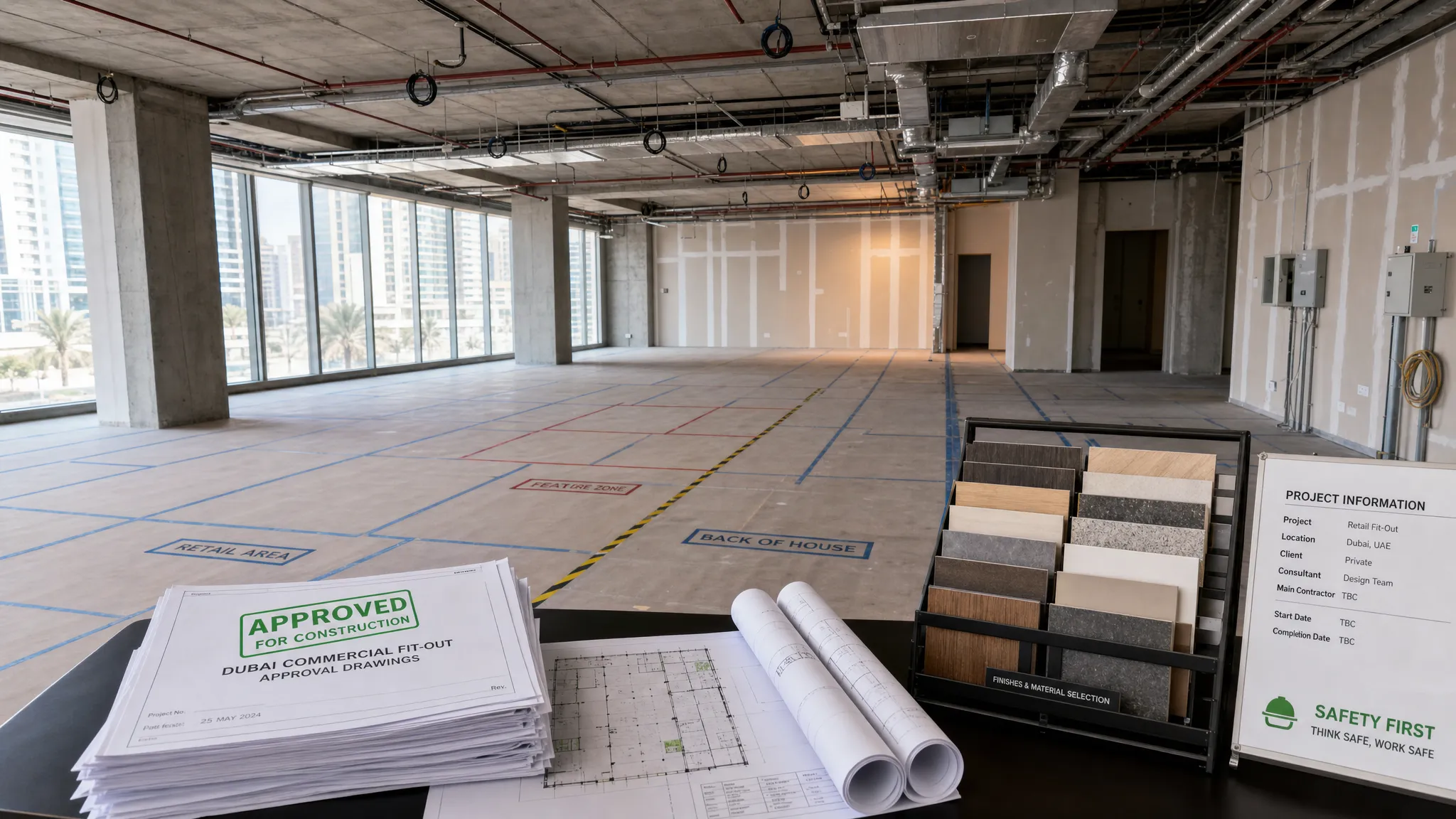
Fast commercial renovation is not about rushing trades or cutting quality. It is about removing uncertainty before the first worker arrives on site. In Dubai, where businesses often renovate around lease dates, mall rules, building management approvals, staff schedules, and customer expectations, a delayed fit-out can quickly become expensive.
A well-planned commercial renovation helps you open earlier, reduce downtime, protect daily operations, and avoid last-minute design compromises. Whether you are upgrading an office, clinic, showroom, restaurant, salon, retail store, or commercial villa, the planning stage determines how smoothly the work will move once demolition, MEP, carpentry, flooring, painting, and final finishes begin.
Below are practical planning tips to help Dubai business owners and facility managers achieve faster delivery without sacrificing safety, compliance, or finish quality.
Start with a clear business deadline, not just a construction deadline
Many commercial projects start with a vague target such as “finish as soon as possible.” That is not enough for fast delivery. Your renovation team needs to know the real business deadline behind the project.
For example, are you opening before a product launch, a seasonal retail period, a new lease start date, a licensing inspection, or a staff relocation? These details influence phasing, procurement, authority submissions, working hours, and handover priorities.
Instead of asking only “How long will the renovation take?”, define what must be ready by opening day. A showroom may need customer-facing areas complete first while back-office storage can follow. An office may need meeting rooms and workstations ready before decorative wall finishes. A restaurant or clinic may need inspections and service connections completed before furniture styling.
This difference matters because the fastest project is not always the one where everything finishes at once. It is often the one where the critical business areas are prioritized intelligently.
Complete a detailed site survey before finalizing the schedule
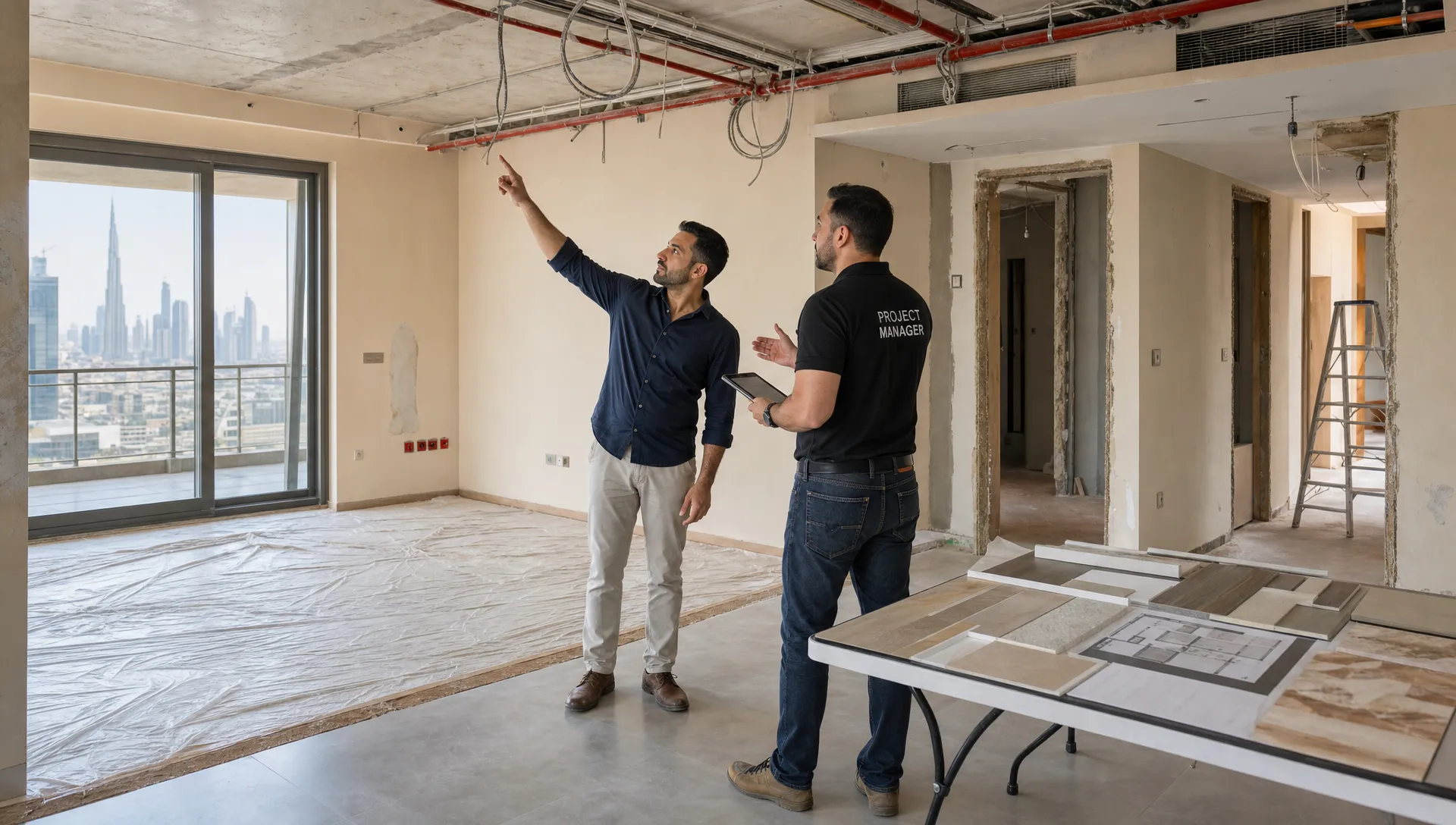
A site survey is one of the biggest time-savers in commercial renovation. It identifies hidden issues before they become site delays. In Dubai, commercial units can vary widely depending on whether they are in a tower, mall, business park, warehouse, villa, hotel building, or free zone property.
A professional survey should review the existing layout, ceiling heights, electrical capacity, plumbing points, drainage locations, HVAC condition, fire safety provisions, access routes, loading areas, lift rules, and restrictions from the landlord or building management.

Skipping this step often leads to surprise changes during execution. For example, a planned pantry may need relocation because drainage access is not practical. A custom ceiling may need redesign because of existing AC ducts. A heavy reception counter may need checking against access and installation constraints.
| Potential delay | What causes it | How to prevent it |
|---|---|---|
| MEP redesign | Existing services do not match drawings | Conduct site inspection and service tracing early |
| Material waiting time | Finishes are selected too late | Approve materials before demolition starts |
| Approval hold-ups | Missing drawings or NOCs | Prepare authority and landlord documents in advance |
| Rework | Scope changes during execution | Freeze layouts and specifications before site mobilization |
| Access delays | Lift, loading, or working-hour restrictions | Confirm building rules before scheduling trades |
A strong survey also improves quotation accuracy. When the contractor understands the real site condition, you reduce provisional items, change orders, and unnecessary downtime.
Freeze the scope before work begins
Scope clarity is one of the simplest ways to speed up a commercial renovation. If the design, drawings, materials, and work areas keep changing during construction, even the best contractor will struggle to maintain speed.
Before site work starts, prepare a written scope that includes layout plans, demolition details, wall and partition work, flooring areas, ceiling design, lighting layout, electrical points, plumbing work, joinery requirements, paint finishes, signage zones, and any special operational needs.
For commercial spaces, the scope should also define practical details such as number of workstations, storage needs, reception flow, customer waiting areas, meeting rooms, pantry requirements, washroom upgrades, display units, and acoustic privacy where needed.
If you are planning a broader workplace upgrade, it can help to review related service requirements in advance. Best Renovation’s guide to commercial renovation services in Dubai explains the main work categories businesses typically need, including fit-out, MEP, flooring, painting, carpentry, and washroom renovation.
Separate approvals from construction time
One common mistake is assuming that the project timeline starts only when workers arrive. In reality, commercial renovation delivery includes design, documentation, landlord coordination, authority approvals, procurement, construction, inspections, snagging, and handover.
In Dubai, approvals may involve the building owner, mall management, developer, free zone authority, Dubai Municipality, Dubai Civil Defence, and other relevant entities depending on the property type and business activity. Requirements vary, so your contractor should confirm what applies before committing to a start date.
The faster approach is to treat approvals as a separate planning track. While drawings and documentation are being prepared, you can also finalize materials, confirm procurement lead times, arrange temporary storage, and plan staff relocation or customer communication.
Never start work based on assumptions if approvals are required. Unauthorized work can cause stoppages, penalties, rework, or delays during handover. A compliant project may take more preparation upfront, but it is usually faster overall because it avoids interruption.
Identify long-lead materials early
Materials often decide whether a commercial renovation finishes on time. Custom joinery, imported tiles, special lighting, glass partitions, acoustic panels, branded fixtures, sanitaryware, stone tops, metalwork, and smart systems may need ordering before construction begins.
For faster delivery, divide materials into three groups. First are must-have items that affect construction sequence, such as flooring, tiles, ceiling systems, doors, glass, and MEP fixtures. Second are visual finish items, such as wall coverings, decorative lights, handles, and feature materials. Third are flexible items that can be installed later without delaying opening, such as loose furniture, accessories, or non-critical decor.
This helps you make smart decisions if a product is delayed. If a specific imported flooring option will delay opening by six weeks, a suitable available alternative may be better for business continuity. Speed does not mean choosing cheap materials. It means choosing materials that are durable, available, and appropriate for commercial use.
Plan MEP, plumbing, and drainage before finishes
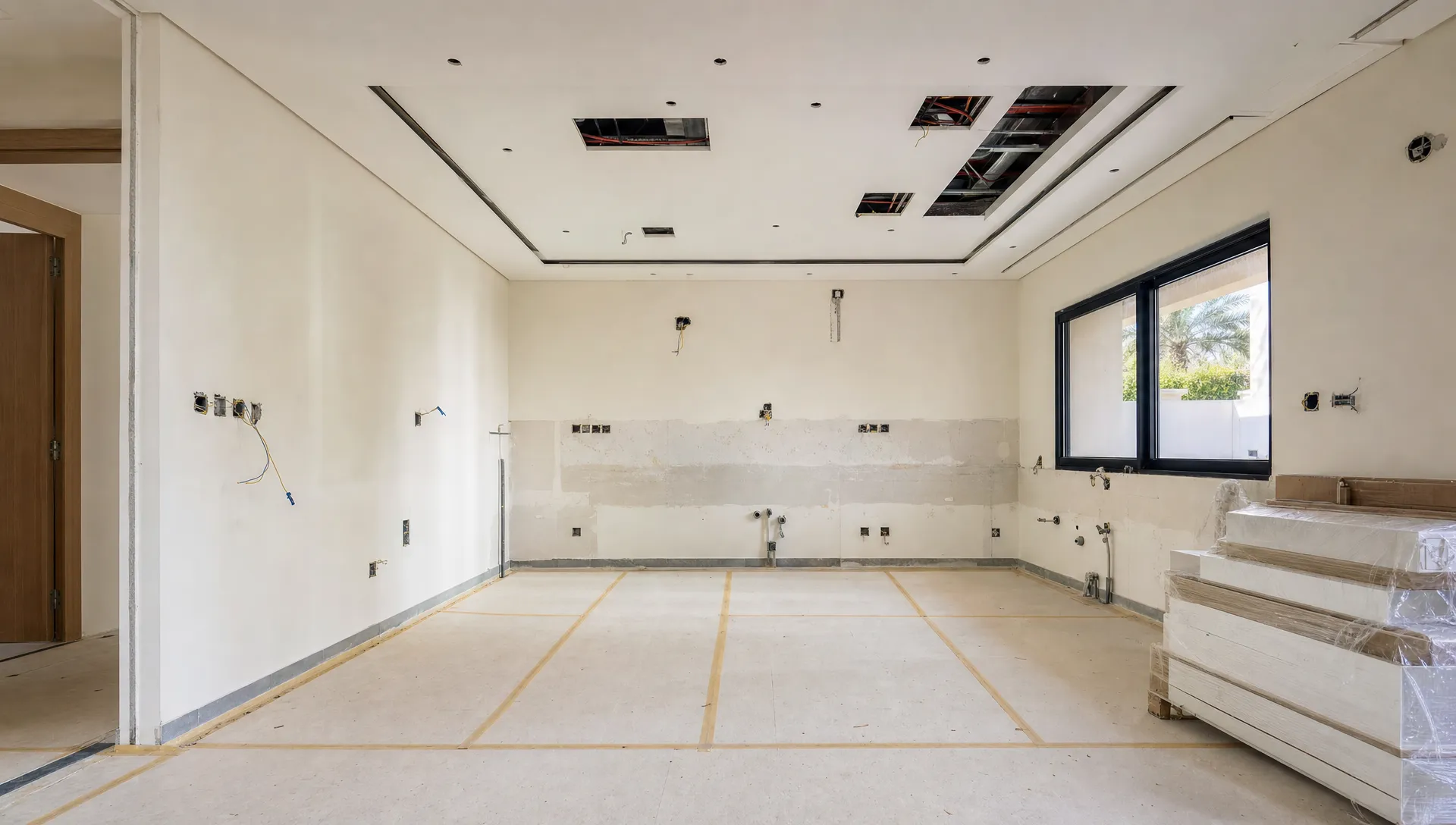
Mechanical, electrical, and plumbing work sits behind the surfaces your customers and employees see. If these systems are not planned early, they can delay ceilings, walls, flooring, joinery, and final painting.
In commercial renovation, MEP planning should cover power loads, lighting circuits, emergency lighting, AC modifications, data points, CCTV, fire alarm coordination, plumbing lines, drainage slopes, water pressure, ventilation, and access panels for maintenance.
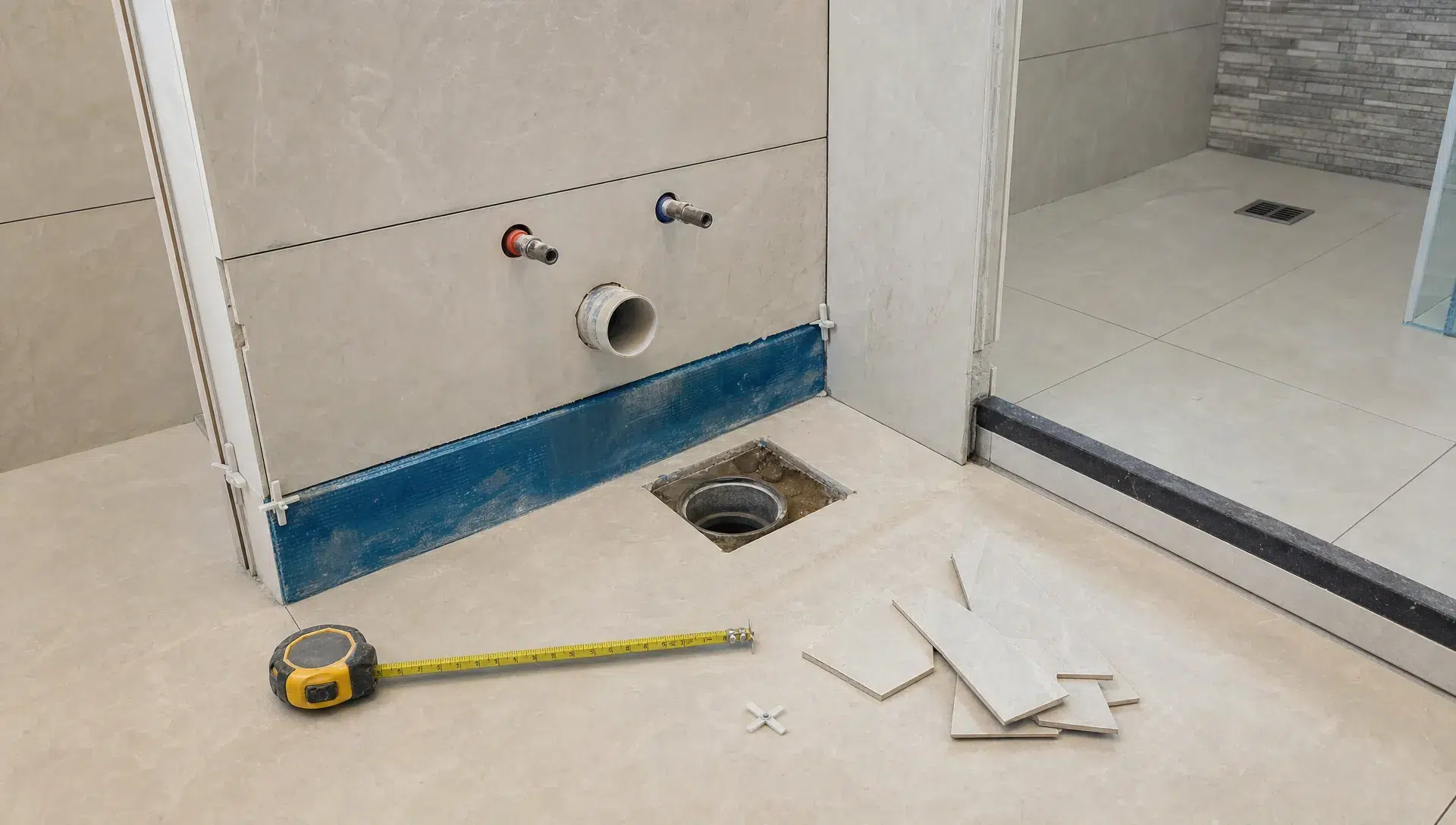
Wet areas need extra attention. Pantries, washrooms, salons, restaurants, clinics, and staff facilities can all create hidden plumbing and drainage challenges. Internationally, specialist teams such as authorised drainage contractors show why early assessment of underground and wastewater systems is important before finishing work begins.
For Dubai projects, this same principle applies locally. Confirm service routes, waterproofing requirements, drainage practicality, and maintenance access before closing ceilings or walls. Reopening finished surfaces to correct hidden services is one of the fastest ways to lose time and increase cost.
Choose a contractor with commercial sequencing experience
Commercial renovation is different from residential renovation. Speed depends heavily on sequencing, trade coordination, authority coordination, and site logistics. A contractor may be skilled at finishes but still struggle with fast delivery if they cannot manage multiple trades in the right order.
When shortlisting contractors, ask how they plan the sequence of work. A good commercial renovation schedule should show when demolition, MEP rough-in, partitioning, ceiling framing, flooring, joinery measurement, painting, installation, testing, snagging, and handover will happen.
You should also ask who will coordinate with building management, how site access will be controlled, how materials will be delivered, and how daily progress will be reported. For active businesses, ask whether phased work or after-hours work is possible within building rules.
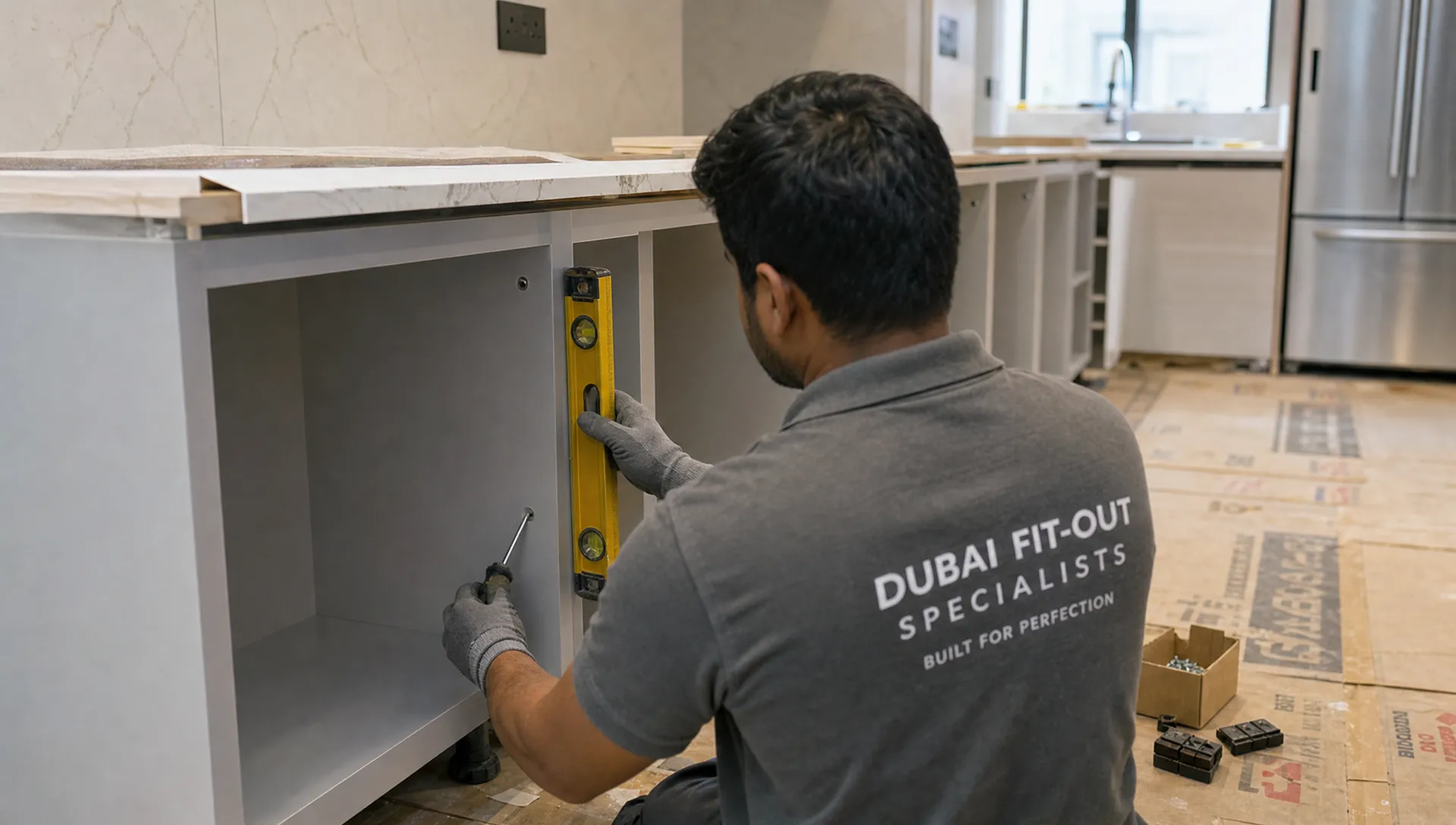
Best Renovation provides commercial renovation, interior design, fit-out, plumbing, carpentry, wooden flooring, and wall painting services in Dubai. For business owners, this integrated approach can reduce coordination gaps because key renovation trades can be planned together from the beginning.
Build the schedule around business operations
If your business will remain open during renovation, the schedule must protect operations. This is especially important for offices, clinics, salons, restaurants, retail stores, and service businesses that cannot afford full closure.
A phased plan may divide work by zones, floors, departments, or customer-facing and back-of-house areas. The goal is to isolate disruption while allowing safe movement for staff and visitors.
For example, an office renovation may complete meeting rooms first so teams have a temporary workspace during open-plan upgrades. A retail renovation may schedule noisy work after trading hours and focus daytime activity on low-disruption tasks. A clinic may renovate admin areas separately from treatment rooms to protect appointment flow.
Phasing can sometimes increase the total number of working days, but it can reduce business downtime. For many companies, that is the better measure of speed.
Confirm working hours, access, and site rules before mobilization
A renovation schedule can look perfect on paper but fail on site if access rules are not clear. Many commercial buildings in Dubai have restrictions on noisy work, loading times, service lift booking, waste removal, parking, contractor permits, and material storage.
Before work begins, confirm these details with building management or the landlord. If contractors can only move materials at night or use the service lift during limited hours, that must be reflected in the schedule. If noisy work is allowed only at specific times, demolition and drilling need careful planning.
Waste removal is another often-overlooked issue. A fast site is a clean and organized site. If debris blocks work areas, trades slow down and safety risks increase. Plan disposal routes, skip permissions where applicable, and daily cleaning responsibilities before demolition starts.
Approve samples before bulk work starts
Commercial clients often lose time because finishes are debated after site work has already begun. Paint colors, flooring tones, laminate textures, stone patterns, tile sizes, lighting temperature, and joinery handles may look different in real lighting than they do in a catalogue.
Request samples early and review them on site where possible. For offices and retail spaces, lighting temperature can dramatically change how finishes look. For restaurants, clinics, and salons, durability and cleanability matter as much as appearance.
A simple sample board can prevent delays and disputes. Once approved, document each finish clearly with product name, code, location, and quantity. This helps procurement and reduces the chance of wrong materials arriving on site.
Use design decisions that are fast to build and easy to maintain
Some designs look impressive in 3D but are slow to execute, difficult to maintain, or unsuitable for heavy commercial use. Fast delivery requires design intelligence.
For example, modular ceiling details may be quicker to install than highly complex custom shapes. Durable vinyl, porcelain, engineered wood, or commercial-grade laminate flooring may be more practical than delicate finishes in high-traffic areas. Painted feature walls may be faster to refresh than complicated wall cladding if your brand updates frequently.
This does not mean your commercial space should look basic. It means the design should match the deadline, budget, maintenance needs, and daily use of the business. A well-designed commercial renovation balances brand impact with buildability.
Lock decisions with a single approval person
Too many decision-makers can slow a project more than any technical issue. If every finish, site query, and layout adjustment needs approval from several managers, the contractor may lose days waiting for answers.
Before construction begins, appoint one project decision-maker from your company. This person should be available for quick approvals, site meetings, and urgent clarifications. If senior management approval is needed for major changes, define which decisions require escalation and which can be handled immediately.
A fast approval system protects the schedule. It also avoids confusion when different stakeholders give conflicting instructions to the site team.
Track progress with milestone inspections
Daily supervision matters, but milestone inspections are especially useful for faster delivery. They catch issues before they become expensive rework.
Key milestones usually include site handover, demolition completion, MEP rough-in, waterproofing where applicable, ceiling closure, flooring preparation, joinery installation, painting, testing, snagging, and final handover.
| Milestone | What to check | Why it speeds delivery |
|---|---|---|
| Site handover | Access, protection, existing condition, utilities | Prevents disputes and unclear responsibilities |
| MEP rough-in | Power, plumbing, AC, data, fire coordination | Avoids reopening ceilings and walls later |
| Finish approval | Flooring, paint, joinery, lighting samples | Prevents wrong materials and late changes |
| Pre-handover | Snags, cleaning, testing, documentation | Reduces final-day surprises |
| Final handover | Keys, warranties where applicable, manuals, as-built details | Helps the business reopen smoothly |
These checks should not be treated as formalities. They are decision points that keep the project moving in the right direction.
Prepare for handover before the final week
Many commercial renovation delays happen at the very end. The space looks almost finished, but small issues prevent opening. Missing access cards, incomplete cleaning, untested lights, plumbing leaks, AC balancing issues, signage delays, furniture delivery conflicts, or pending snag items can all affect launch day.
Start handover planning early. Confirm who will receive keys, who will check snags, when deep cleaning will happen, when furniture and equipment will arrive, and whether any authority or landlord inspection is required before opening.
For customer-facing businesses, plan a soft opening period if possible. This allows your team to test lighting, AC, customer flow, storage, POS locations, pantry use, washroom function, and maintenance access before full operations begin.
Common mistakes that slow down commercial renovation
Even when the contractor is capable, certain client-side decisions can delay delivery. The most common mistakes include starting without a finalized scope, choosing materials after work begins, underestimating approval time, ignoring MEP constraints, changing layouts mid-project, delaying payments tied to procurement, and failing to coordinate with building management.
Another major mistake is focusing only on the lowest quote. A low initial price can become expensive if it excludes important items, relies on unrealistic timeframes, or does not include proper supervision. In commercial renovation, value comes from speed, coordination, compliance, and durability, not just the starting number.
A better approach is to compare quotations based on scope completeness, material clarity, timeline logic, project management support, and experience with similar commercial spaces.
A practical pre-start checklist for faster delivery
Use this checklist before confirming your commercial renovation start date:
- Business opening deadline is confirmed and shared with the contractor.
- Site survey is completed and existing services are reviewed.
- Layout, drawings, and scope of work are approved.
- Landlord, developer, building, or authority approval requirements are identified.
- Long-lead materials are selected and procurement dates are confirmed.
- MEP, plumbing, drainage, HVAC, data, and fire safety requirements are coordinated.
- Working hours, loading access, waste removal, and contractor permits are confirmed.
- One company representative is appointed for fast decisions.
- Material samples are approved before bulk orders.
- Handover requirements, snagging process, and opening plan are agreed.
This preparation may take time, but it saves more time during execution. A project that starts with clarity usually finishes faster than one that starts quickly but keeps stopping for decisions.
Frequently Asked Questions
How can I speed up a commercial renovation in Dubai? Start with a detailed site survey, finalize the scope before construction, confirm approvals early, order long-lead materials in advance, and appoint one decision-maker for quick approvals. A realistic schedule with proper trade sequencing is more effective than rushing site work.
Do commercial renovations in Dubai need approvals? Many projects require approval from the landlord, building management, developer, free zone, Dubai Municipality, Dubai Civil Defence, or other relevant authorities depending on the location and scope. Always confirm requirements before starting work.
Can a business stay open during renovation? In many cases, yes, if the work is phased safely and building rules allow it. Noisy, dusty, or service-disrupting work may need to happen after hours or in isolated zones. The feasibility depends on the business type and renovation scope.
What causes the biggest delays in commercial renovation? Common delays include late material selection, missing approvals, MEP redesign, unclear scope, restricted site access, design changes during construction, and slow client decisions.
Is a faster renovation always more expensive? Not always. Good planning can reduce wasted time and rework, which helps control cost. However, very compressed timelines may require extra shifts, faster procurement, or additional supervision, so the schedule should be balanced with budget and quality.
Plan your commercial renovation with fewer delays
A faster commercial renovation depends on preparation, not pressure. When the scope is clear, approvals are understood, materials are ready, and trades are properly sequenced, your business has a much better chance of opening on time.
Best Renovation supports Dubai businesses with commercial renovation, fit-out solutions, interior design, plumbing, carpentry, wooden flooring, wall painting, kitchen remodeling, and bathroom renovation services. If you are planning an office, retail, showroom, clinic, or commercial space upgrade, contact Best Renovation to discuss your project, timeline, and delivery priorities.