A designer renovation should do more than make a room look new. It should make the home feel more considered, easier to live in, and more appealing to future buyers or tenants. In Dubai, where expectations for interiors are high and properties compete on finish, layout, and lifestyle, the best renovations combine beauty with practical upgrades that support long-term value.
The key is not to spend on every luxury material available. A successful designer renovation focuses on the right details: better light, smarter storage, durable surfaces, comfortable layouts, and a clear visual identity. Whether you are updating an apartment, villa, townhouse, or commercial space, these ideas can help you create a stylish result that also makes financial sense.
What makes a renovation feel designer?
A standard renovation usually replaces old finishes with new ones. A designer renovation goes further. It considers how people move through the space, what they see first, how light changes during the day, how materials connect from room to room, and how the home supports everyday routines.
In Dubai, this matters because interiors must handle strong sunlight, constant air conditioning, humidity, sand, and frequent entertaining. A beautiful finish that looks impressive on day one but scratches, stains, or warps easily will not protect your investment. Designer planning balances aesthetics with maintenance, climate suitability, approvals, and craftsmanship.
The best results usually come from making the home feel cohesive. Flooring, wall finishes, lighting temperature, door profiles, cabinetry, metal accents, and bathroom fixtures should look like they belong to the same story. When every room has a different theme, the property can feel expensive but disconnected. When every detail is coordinated, even a modest renovation feels premium.
Designer renovation ideas at a glance
| Renovation idea | Style impact | Value impact | Best suited for |
|---|---|---|---|
| Layered lighting | Makes rooms feel warmer, larger, and more luxurious | Strong, because lighting improves every finish | Apartments, villas, offices |
| Statement kitchen | Creates a high-impact social and functional space | Strong, especially for resale and rental appeal | Family homes, open-plan apartments |
| Spa-style bathroom | Adds comfort and a premium hotel feel | Strong when waterproofing and ventilation are done well | Master suites, guest bathrooms |
| Custom joinery | Reduces clutter and creates a tailored look | Strong, especially in compact homes | Bedrooms, living rooms, hallways |
| Seamless flooring | Improves flow and visual spaciousness | Medium to strong, depending on material durability | Apartments, villas, commercial spaces |
| Indoor-outdoor upgrades | Extends living space and improves lifestyle appeal | Strong for villas and townhouses | Gardens, terraces, balconies |
| Smart comfort features | Adds convenience and efficiency | Medium to strong when systems are simple to use | Modern homes, rental properties |
| Wellness-focused rooms | Supports comfort, health, and flexible living | Medium, but growing in importance | Home offices, gyms, family spaces |
1. Create a stronger entrance and first impression
The entrance sets the tone for the entire property. In many Dubai apartments, the door opens directly into the living space, which can make the home feel less private. In villas, long foyers can feel underused if they are not designed intentionally.
A designer entrance can include a slim console, a mirror, fluted wall panels, stone-effect cladding, concealed shoe storage, soft wall lights, or a statement pendant. The goal is not to overcrowd the area. It is to create a clear arrival moment that feels welcoming and organized.
This upgrade is especially valuable because it affects the first impression during property viewings. A well-designed foyer suggests that the rest of the home has been planned with equal care.
2. Open the layout, but keep the zones clear
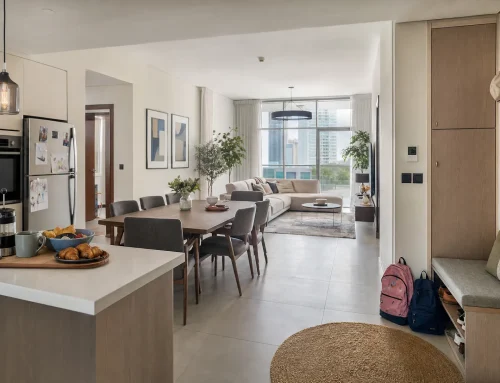
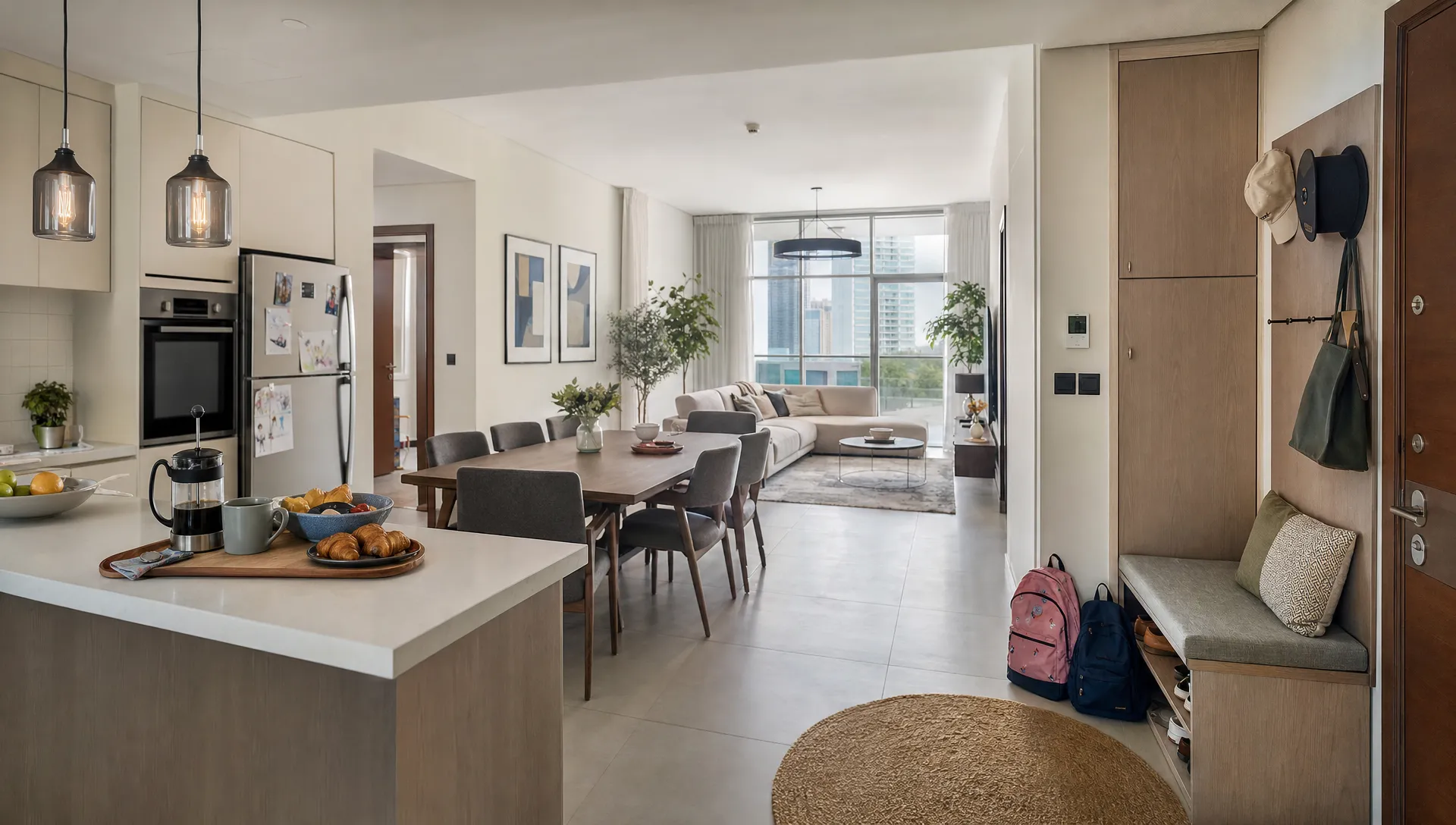
Open-plan living remains popular in Dubai, especially for families who want the kitchen, dining, and living areas to feel connected. However, removing too many boundaries can create a space that feels like one large hall rather than a sophisticated home.
The designer approach is to open the layout while still defining zones. Ceiling details, lighting groups, rugs, partial screens, glass partitions, floor transitions, and built-in furniture can separate functions without closing the space. For example, a living area can feel distinct from the dining area through a feature wall and warmer lighting, while the kitchen remains visually connected through a shared island.
Before changing walls, plumbing routes, or electrical layouts, check whether approvals are required from the building management, developer, or relevant Dubai authorities. A beautiful layout must also be compliant and safe.
3. Turn the kitchen into the social centre of the home
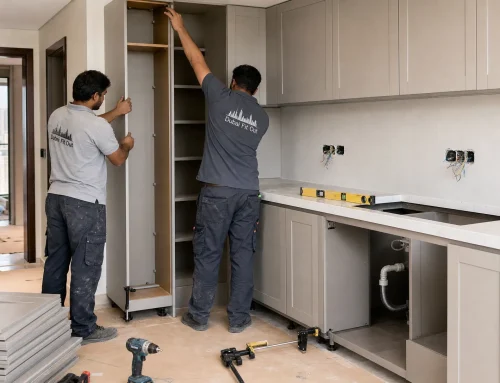
Kitchens are among the most value-sensitive areas in a renovation. Buyers and tenants notice them immediately, and families use them every day. A designer kitchen should feel elegant, but it should also be practical enough for cooking, storage, and entertaining.
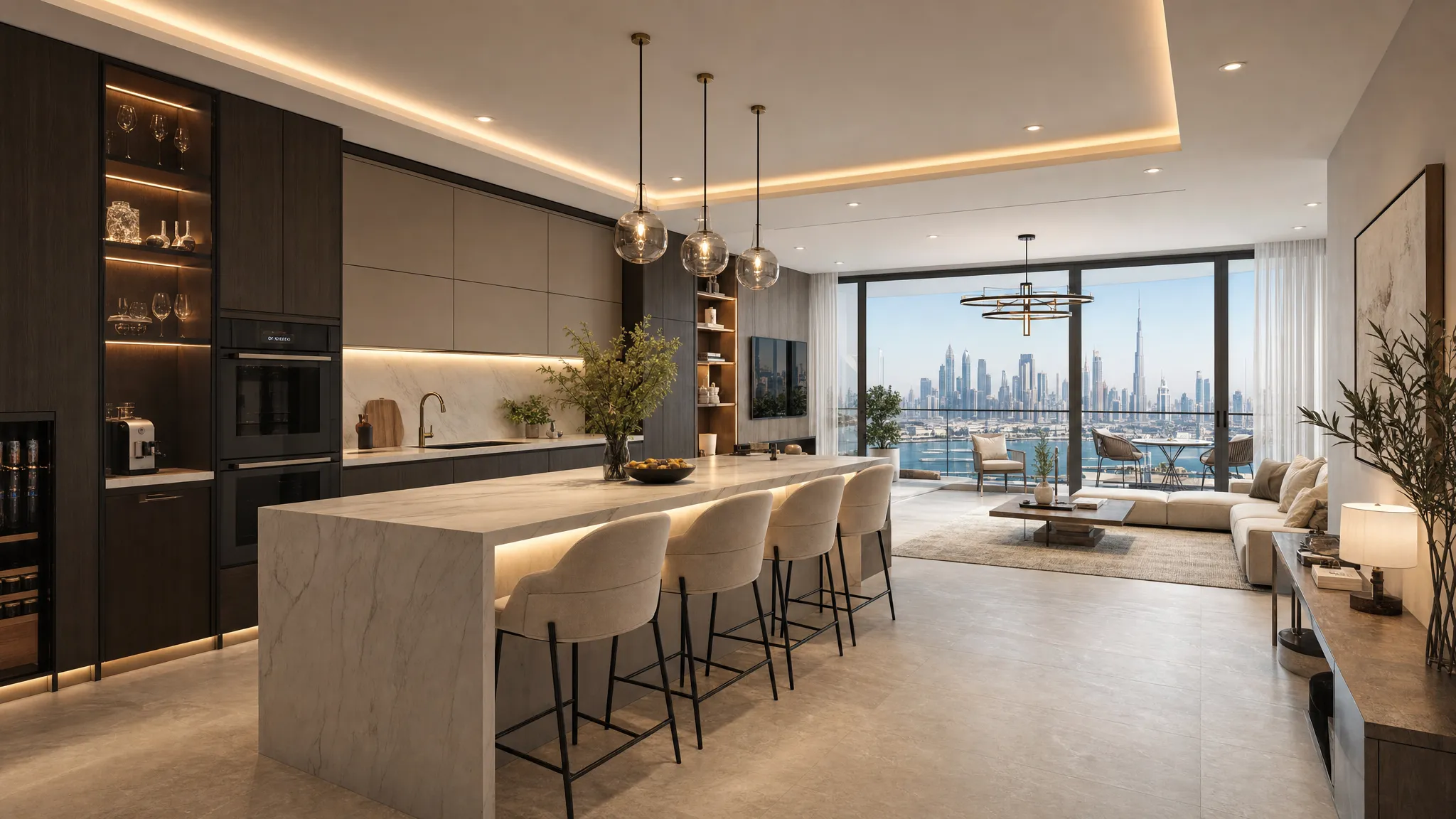
Strong kitchen ideas include a waterfall island, handleless cabinetry, integrated appliances, under-cabinet task lighting, tall pantry storage, soft-close drawers, quartz or porcelain countertops, and a balanced mix of closed and display storage. In open-plan homes, the kitchen should coordinate with the living area rather than look like a separate room.
If you are planning a larger upgrade, professional kitchen renovation in Dubai can help align the layout, materials, plumbing, electrical points, and finishing details from the beginning. This is important because kitchen mistakes are expensive to correct after installation.
4. Upgrade bathrooms with hotel-style comfort
A bathroom renovation can add immediate style and strong practical value, especially when the existing bathroom feels dated, cramped, or poorly ventilated. The most effective designer bathrooms are calm, functional, and easy to maintain.
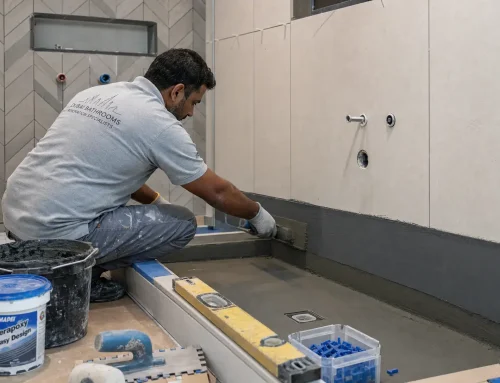
Popular upgrades include walk-in showers with clear glass, floating vanities, recessed niches, backlit mirrors, wall-mounted toilets, large-format tiles, concealed drainage, and warm accent lighting. Neutral stone, beige, greige, soft white, and brushed metal finishes are timeless choices that suit many Dubai homes.
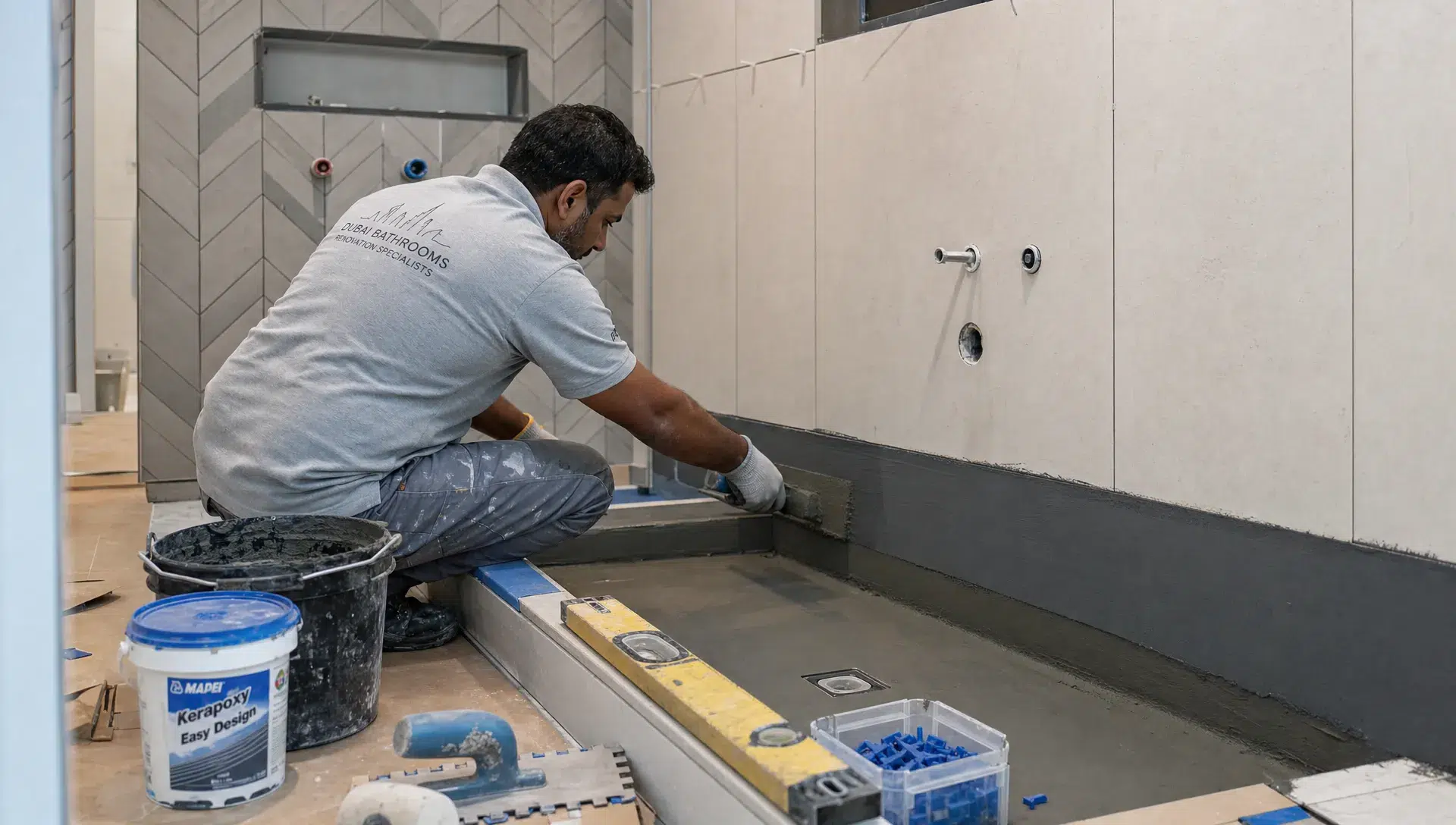
Do not focus only on visible finishes. Waterproofing, drainage slope, ventilation, plumbing pressure, and access panels are just as important. A bathroom that looks luxurious but leaks or traps moisture will reduce value rather than add it. For a more detailed service approach, explore bathroom renovation in Dubai.
5. Use layered lighting instead of one central fixture
Lighting can make an average renovation look expensive, and poor lighting can make premium materials look flat. A designer renovation uses layers rather than relying on one chandelier or a row of harsh ceiling lights.
The main lighting layers are ambient lighting for general brightness, task lighting for cooking or reading, and accent lighting for walls, shelves, artwork, or textured surfaces. Cove lighting, wall washers, pendant lights, floor lamps, and under-cabinet LEDs can all work together when the colour temperature is consistent.
In Dubai homes with large windows, lighting should also be planned for evening use. A room that looks beautiful in daylight may feel cold at night if the lighting is too white or poorly positioned. Warm, dimmable lighting often creates a more premium atmosphere.
6. Add custom joinery for storage and visual order
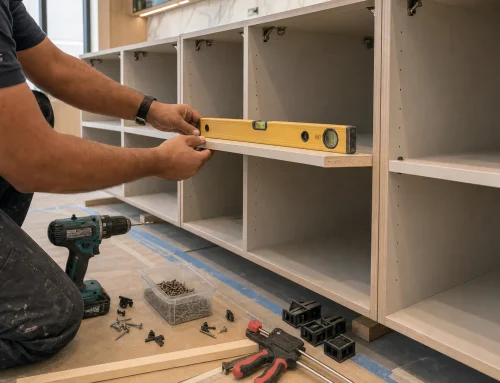
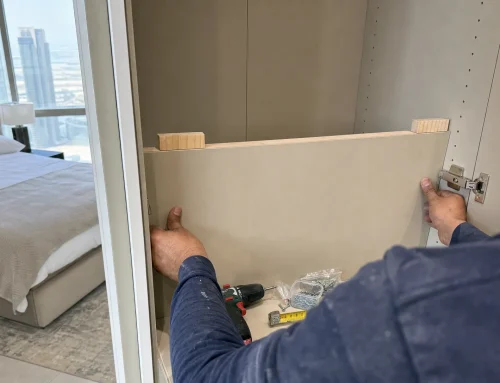
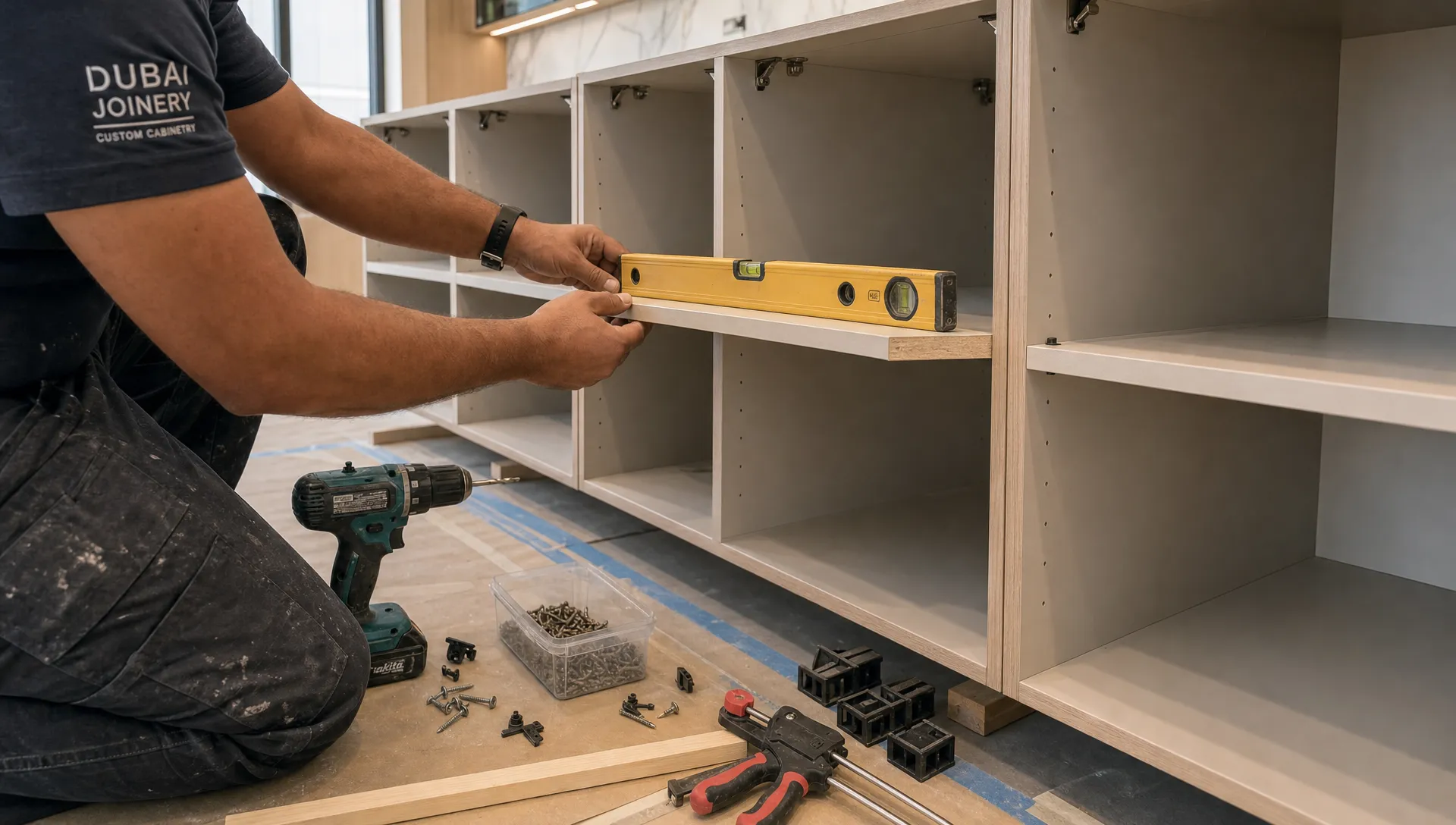
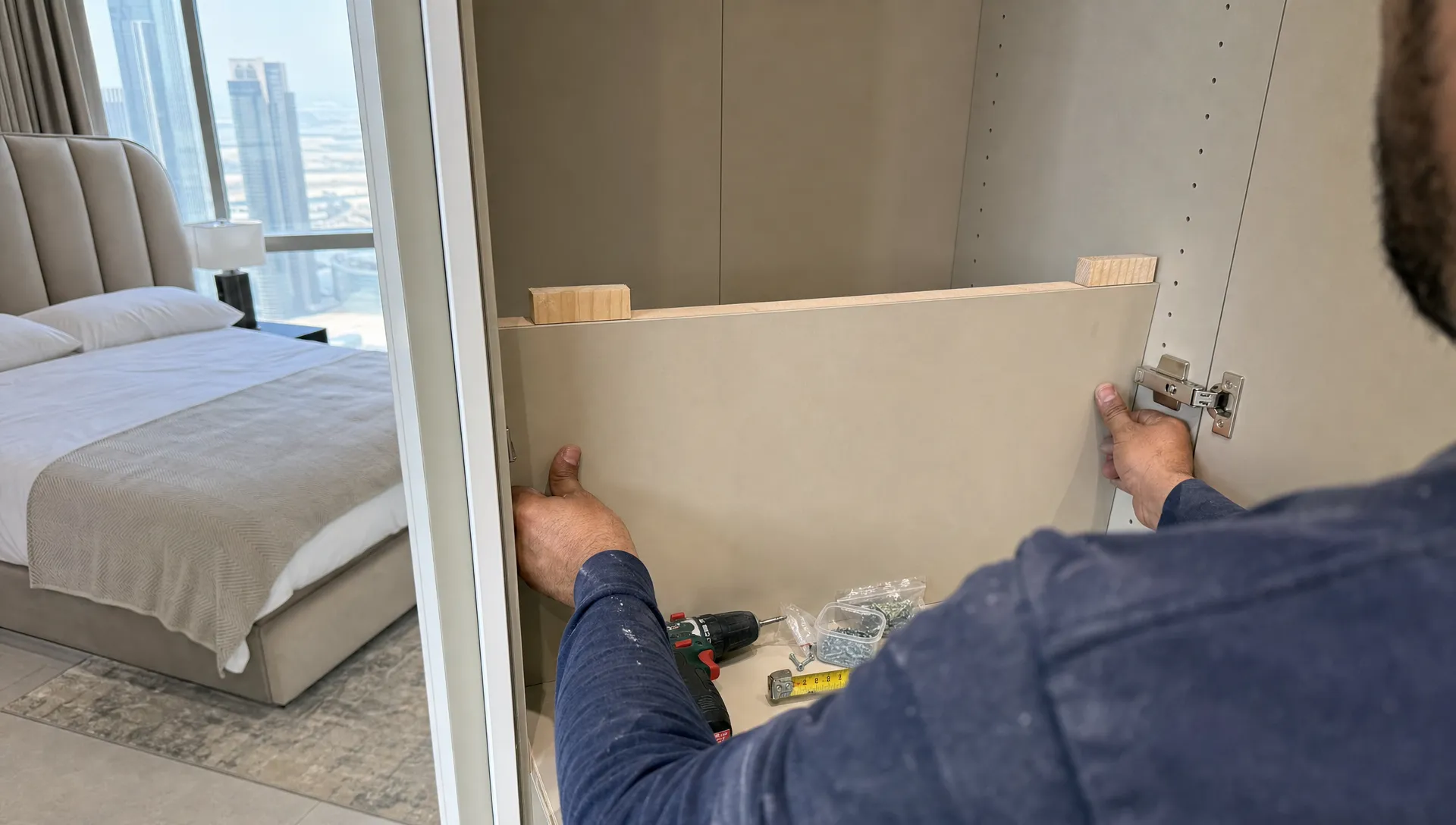
Custom joinery is one of the clearest signs of a designer interior. It makes awkward corners useful, hides clutter, and creates a polished built-in look. This is particularly valuable in apartments, where storage is limited, and in villas, where large rooms can feel unfinished without tailored furniture.
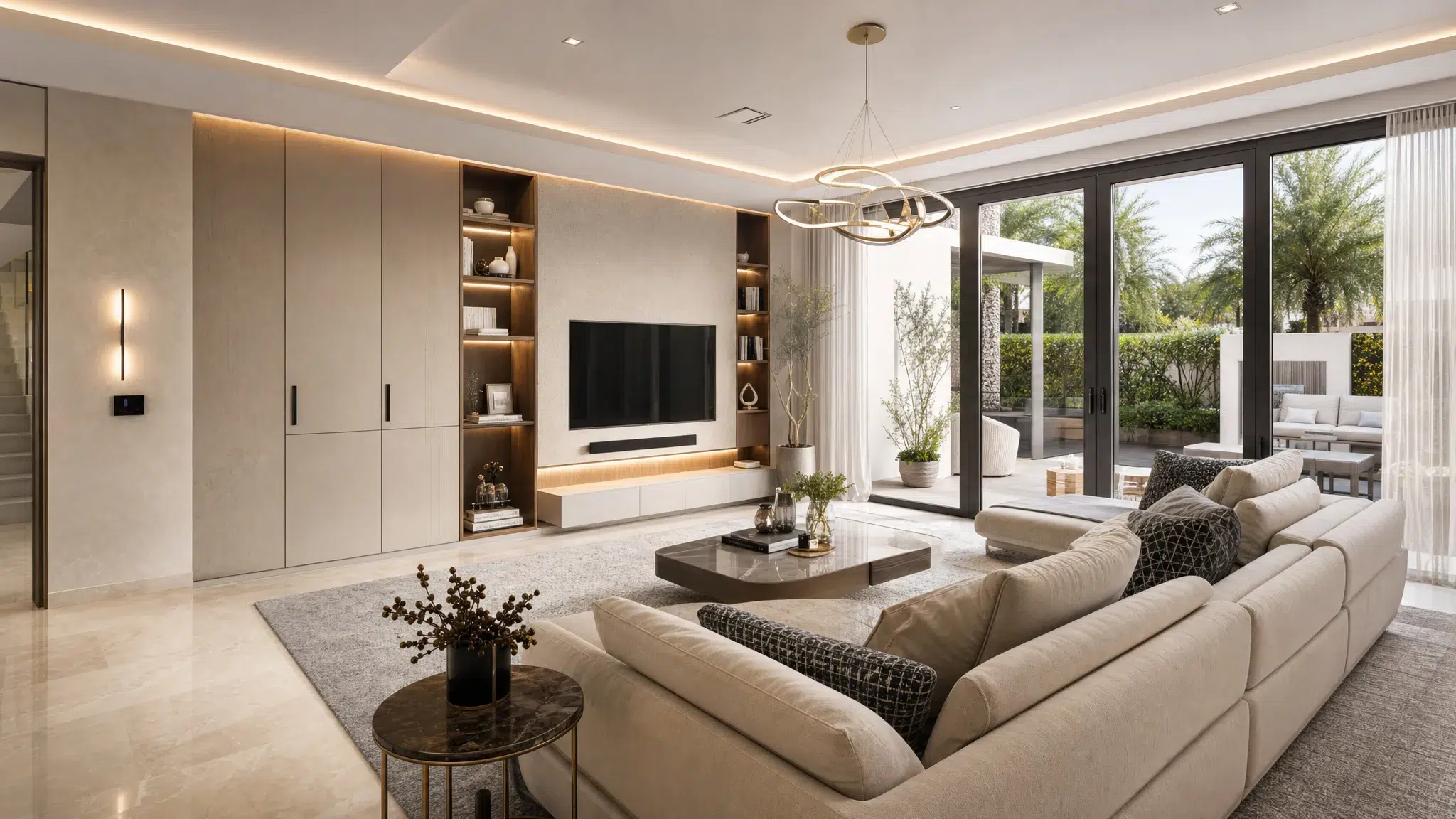
High-impact joinery ideas include media walls, wardrobes, study desks, shoe cabinets, laundry storage, pantry units, vanity cabinets, floating shelves, and concealed AC or service access panels. Details such as shadow gaps, integrated handles, soft-close hardware, and matching edge bands make a big difference.
For Dubai conditions, material selection matters. Moisture-resistant boards, durable laminates, quality veneers, and properly sealed finishes help joinery last longer, especially in kitchens, bathrooms, and laundry areas.
7. Choose flooring that creates continuity
Flooring covers a large visual area, so it strongly affects how expensive a home feels. Using too many floor types can make the property feel smaller and more fragmented. A designer renovation often uses one main flooring material across connected areas, then adds contrast only where it makes functional sense.
Large-format porcelain tiles, engineered wood, luxury vinyl, natural stone, and high-quality laminate can all work depending on budget, usage, and maintenance expectations. For villas, durable flooring is especially important near garden doors, pools, and high-traffic family areas. For apartments, lighter continuous flooring can make rooms feel larger and brighter.
If you love natural wood but worry about maintenance, consider where it is most suitable. Bedrooms and studies may be better candidates than wet areas or spaces exposed to heavy outdoor traffic.
8. Make walls feel architectural, not just painted
Paint is important, but designer walls often include texture, depth, and proportion. A plain wall can become a focal point through panel moulding, microcement, limewash-style finishes, wallpaper, stone cladding, fluted wood, acoustic panels, or a built-in shelving composition.
The safest way to add value is to keep permanent wall features elegant rather than overly personal. A soft textured wall behind the bed, a refined TV wall, or a stone-effect dining feature can appeal to many tastes. Highly specific colours, oversized murals, or trend-heavy patterns may be harder to resell.
Wall upgrades are also a good place to balance budget. You do not need to treat every wall. One or two carefully designed focal areas can transform the mood of the property.
9. Extend lifestyle value outdoors
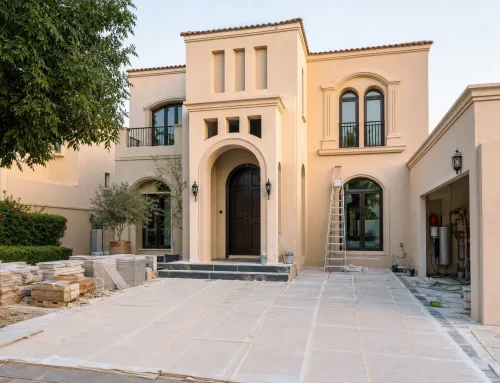
For villas and townhouses, outdoor areas are a major opportunity. In Dubai, gardens, terraces, balconies, and pool decks can function as extra living rooms when shaded and lit correctly. A designer renovation should connect indoor and outdoor spaces visually, especially through flooring tone, furniture style, lighting, and landscape structure.
Consider pergolas, outdoor kitchens, built-in seating, low-maintenance planting, privacy screens, anti-slip tiles, pool lighting, and weather-resistant furniture. In apartments, even a small balcony can feel valuable with deck tiles, planters, compact seating, and soft lighting, as long as building rules allow the changes.
Outdoor upgrades are most successful when comfort is planned early. Shade, airflow, drainage, privacy, and maintenance access are just as important as the final look.
10. Add smart comfort without overcomplicating the home
Smart home features can increase convenience and modern appeal, but only when they are easy to use. The goal is not to install technology for its own sake. The goal is to make the home more comfortable, efficient, and future-ready.
Useful smart upgrades include lighting scenes, automated curtains, smart thermostats, access control, video doorbells, motion sensors, and simple app-based controls. For larger villas, zoning can help different areas operate independently, which is useful for comfort and energy use.
Keep the system intuitive. If guests, tenants, or family members cannot understand the controls, the feature becomes a frustration rather than a selling point.
11. Design for wellness, posture, and daily comfort
Home design increasingly includes wellness. This does not mean every home needs a spa or gym. It means the layout, furniture heights, lighting, acoustics, and materials should support the way people live and work.
A home office needs proper desk depth, glare control, comfortable seating, and storage that keeps work equipment out of sight after hours. A home gym needs suitable flooring, ventilation, mirrors, and safe equipment spacing. Bedrooms need lighting that supports rest, while bathrooms should consider slip resistance and ease of movement.
If back pain, recovery, or posture issues influence how you use your home, it is worth understanding how the body interacts with daily spaces. Resources on integrated pain relief and musculoskeletal care can offer useful context when planning ergonomic work areas, recovery-friendly rooms, or more supportive daily routines.
12. Match renovation ideas to the property type
Different Dubai properties benefit from different designer upgrades. A villa may gain more value from outdoor living and master suite improvements, while an apartment may benefit more from storage, lighting, and kitchen efficiency.
| Property type | Designer upgrades to prioritise | Planning note |
|---|---|---|
| Apartment | Storage walls, lighting, kitchen upgrades, balcony styling | Check building management rules before works begin |
| Villa | Outdoor areas, bathrooms, kitchen, flooring, smart comfort | Plan MEP, waterproofing, and authority approvals early |
| Townhouse | Space-saving joinery, family kitchen, garden connection | Keep circulation practical for daily family use |
| Commercial space | Fit-out, lighting, reception design, durable finishes | Align design with brand image and operational flow |
This is why a designer renovation should start with the property type, lifestyle, and future goal. A home being upgraded for personal use may justify more bespoke details. A rental property may need durable finishes, neutral appeal, and easy maintenance.
Where to spend, where to save, and what to avoid
The smartest renovation budgets are not spread evenly. Spend more on areas that affect daily use, durability, and first impressions. Save on items that can be replaced easily later.
- Spend on lighting plans, waterproofing, plumbing, electrical work, kitchen cabinetry, bathroom fittings, flooring, and custom joinery.
- Save on loose furniture, decorative accessories, removable wallpaper, rugs, and styling items that can be changed over time.
- Avoid copying trends without considering your property, lifestyle, climate, and maintenance expectations.
- Avoid ultra-personal permanent finishes if resale or rental value is a priority.
- Avoid starting work without drawings, material samples, scope details, and approval checks.
A lower-cost renovation can still feel designer if the proportions, lighting, and finishes are carefully chosen. A high-cost renovation can still feel disappointing if the layout is awkward or the details are poorly executed.
How to plan a designer renovation in Dubai
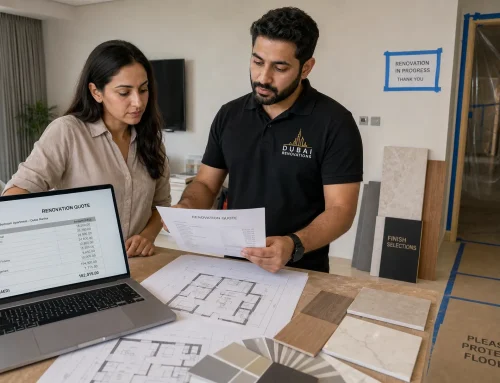
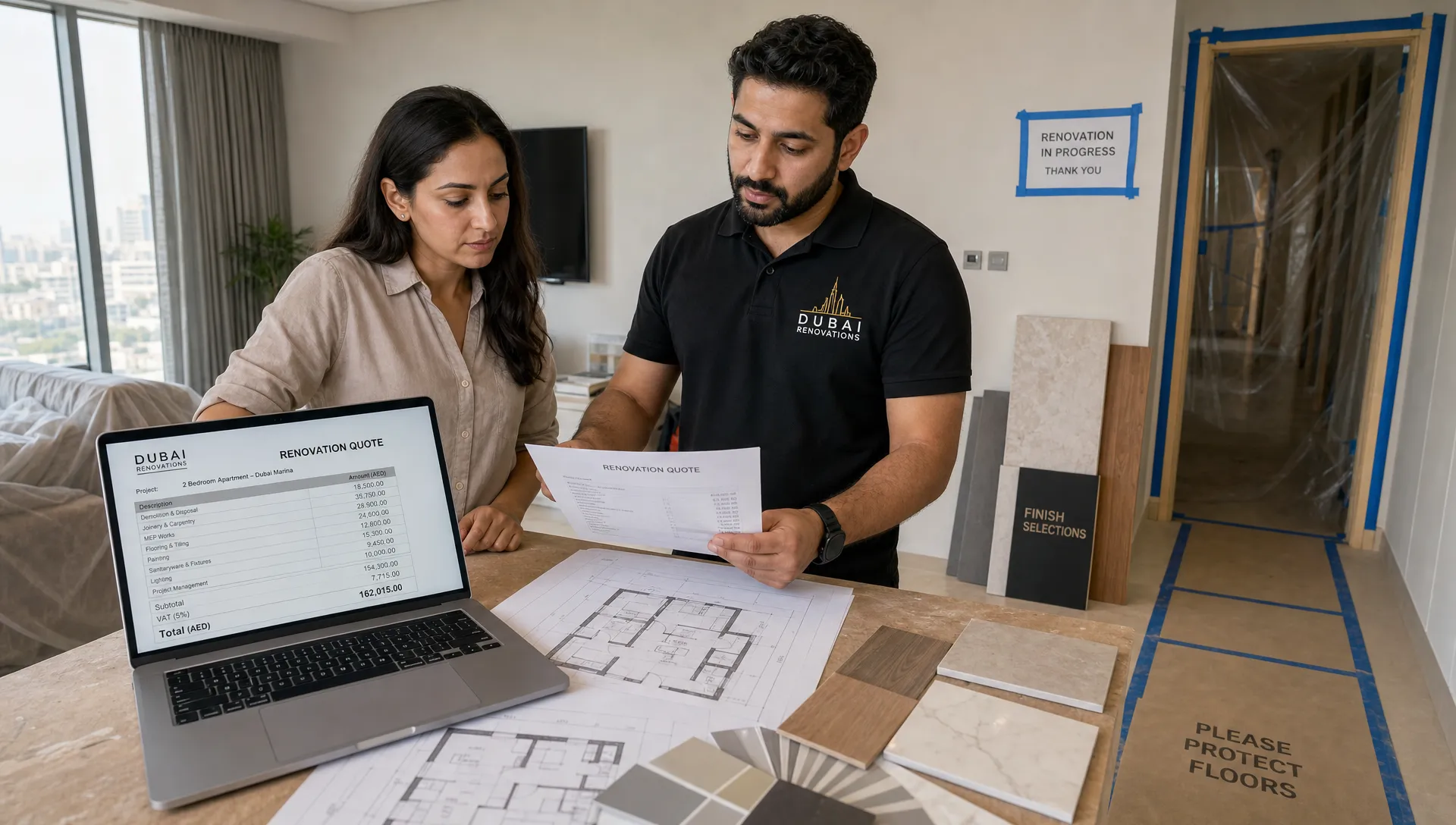
Start with a clear brief. Decide whether your main goal is personal comfort, resale value, rental appeal, luxury lifestyle, family functionality, or commercial branding. The clearer the goal, the easier it is to choose the right materials and avoid unnecessary changes.
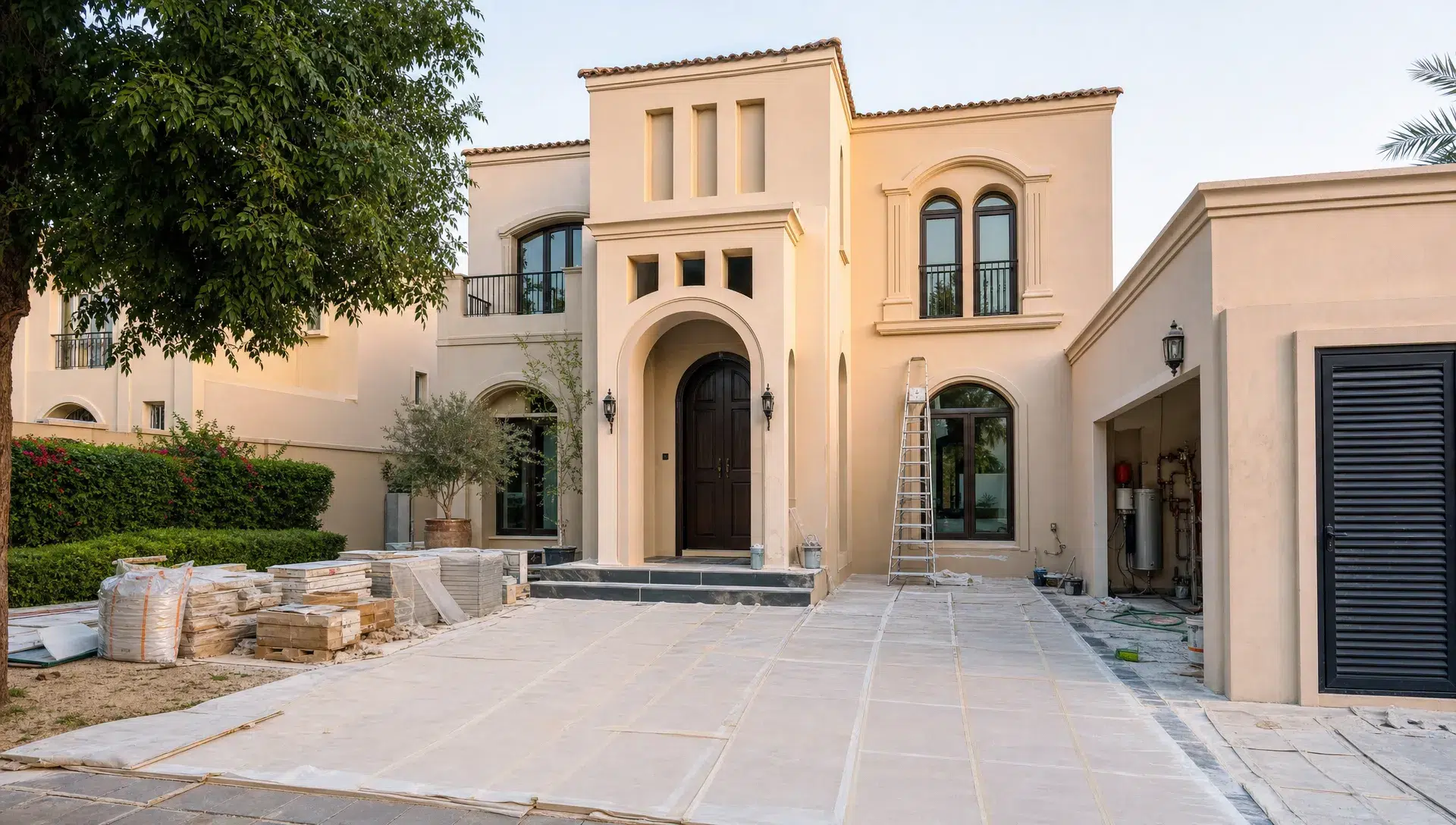
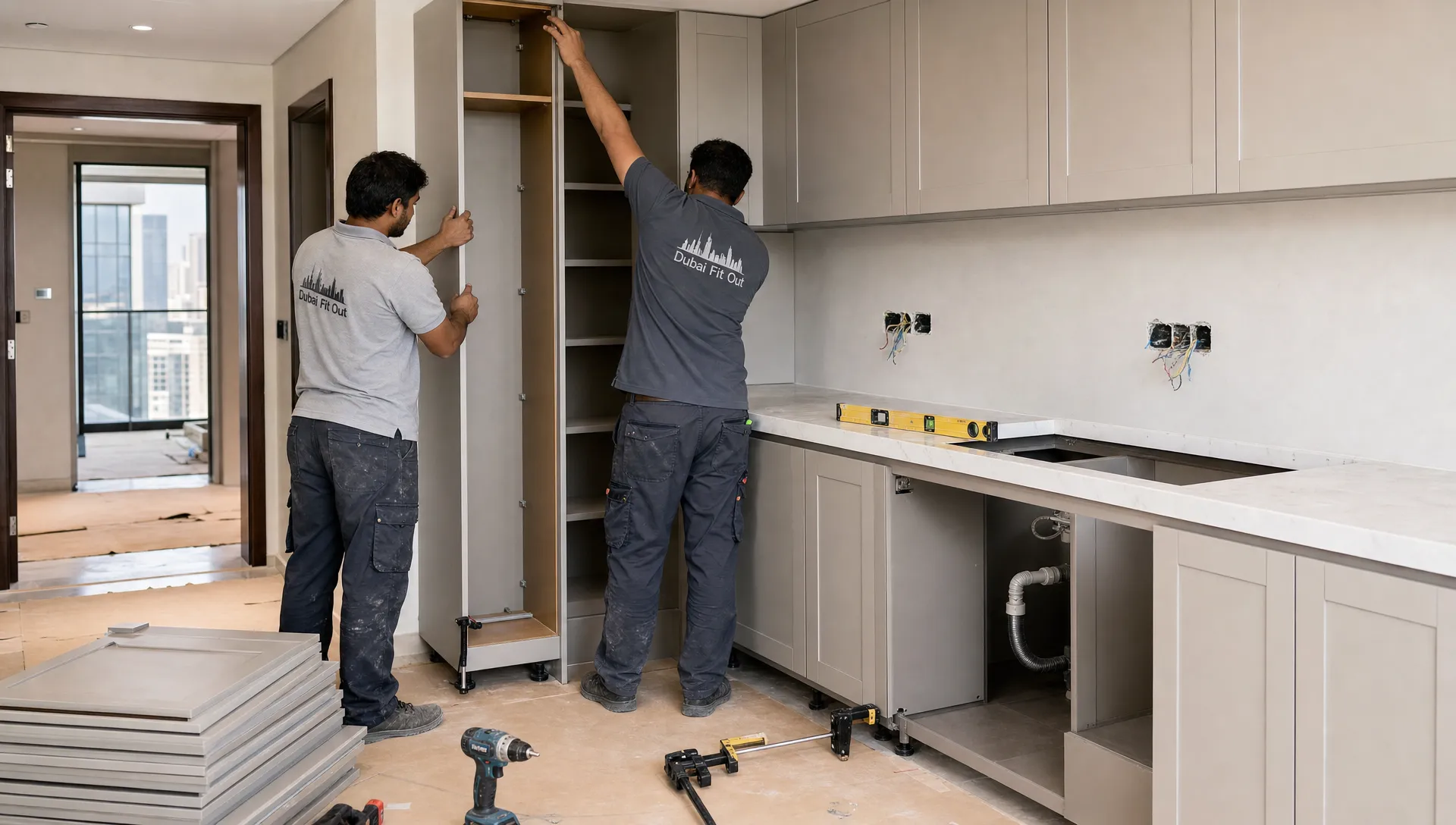
Next, arrange a site assessment. Existing plumbing, electrical capacity, AC routes, ceiling height, wall structure, and building rules can all affect what is possible. For villas, outdoor works, extensions, pools, and façade changes may need additional coordination. For apartments, building management procedures and working-hour restrictions can affect the timeline.
Then move into concept design, drawings, material selection, quotation, approvals, execution, and finishing. Working with a team that understands interior design, fit-out, carpentry, plumbing, flooring, and painting can reduce coordination issues. You can explore custom interior design and remodeling in Dubai if you want a more complete design-led approach.
Frequently Asked Questions
What is a designer renovation? A designer renovation is a renovation planned around aesthetics, function, flow, materials, lighting, and long-term usability. It is not just replacing old finishes. It creates a cohesive space that looks refined and works better every day.
Which renovation ideas add the most value in Dubai? Kitchens, bathrooms, lighting, flooring, custom storage, outdoor living areas, and smart comfort upgrades often have the strongest impact because they improve both daily living and property presentation.
Should I choose trendy or timeless finishes? Timeless finishes are usually safer for long-term value. You can still add personality through lighting, furniture, artwork, rugs, and decorative pieces that are easier to update later.
Do designer renovations require approvals in Dubai? Some works may require approvals or NOCs, especially structural changes, plumbing changes, electrical modifications, façade work, or community-controlled exterior upgrades. Always check requirements before starting.
Can a small apartment benefit from designer renovation? Yes. Small spaces often benefit the most from designer planning because better storage, lighting, mirrors, compact furniture, and continuous flooring can make the home feel larger and more premium.
Plan your designer renovation with Best Renovation
A stylish renovation should look beautiful, but it should also improve comfort, function, durability, and property appeal. Best Renovation provides home renovation, villa renovation, kitchen remodeling, bathroom renovation, interior design, fit-out, plumbing, carpentry, wooden flooring, and wall painting services in Dubai.
If you are ready to upgrade your home or commercial space with a design-led approach, visit Best Renovation to discuss your project and explore renovation solutions tailored to your property.