Bathroom remodeling is one of the most rewarding upgrades you can make to a Dubai home, but it is also one of the easiest to get wrong. Unlike a bedroom or living room refresh, a bathroom involves water supply, drainage, waterproofing, ventilation, electrical safety, storage, lighting and daily comfort in one compact space.
The biggest problems usually happen before work starts. A rushed quote, an unclear layout, the wrong tile choice or skipped approval check can turn a simple remodel into delays, leaks, extra costs and frustrating rework.
If you are planning a bathroom upgrade in an apartment, townhouse or villa, use this guide to avoid the bathroom remodeling mistakes that homeowners most often regret.
Mistake 1: Starting with inspiration photos instead of a practical brief
Pinterest boards and hotel bathroom photos are useful, but they are not a project plan. Many homeowners start by choosing a tile style, vanity color or shower screen design, then discover later that the plumbing, drainage, ceiling height or storage needs do not support the look they wanted.
Before asking for a quote, define what you actually want the remodel to achieve. Is the bathroom too dark? Is the shower leaking? Do you need more storage? Are you converting a bathtub into a walk-in shower? Are you upgrading for personal comfort, rental value or resale appeal?
A strong brief helps your contractor price the work accurately and reduces the chance of scope changes during construction.
| Planning decision | What to clarify before work starts |
|---|---|
| Layout | Are fixtures staying in place or moving? |
| Plumbing | Are pipes, drains, valves or water pressure issues involved? |
| Electrical | Do you need new lighting, mirror power, sockets or smart controls? |
| Finishes | Which tiles, sanitaryware, vanity and accessories are required? |
| Storage | Do you need niches, drawers, cabinets or concealed storage? |
| Approvals | Does your building, developer or community require an NOC? |
A bathroom can look beautiful in a 3D design, but it must work in real life. Start with function, then refine the style.
Mistake 2: Ignoring approvals, NOCs and building rules
In Dubai, bathroom remodeling is not only a design decision. Depending on your property type and the scope of work, you may need approval from building management, an owners association, the developer, the community authority or relevant municipal bodies.
This is especially important in apartments and managed communities. Moving drainage points, altering wet areas, changing exhaust connections, coring slabs, modifying walls or upgrading MEP systems can create compliance issues if not checked in advance.
Approval requirements vary by building and community, so avoid assuming that a small bathroom does not need permission. Before demolition starts, ask your contractor to review the property rules and confirm whether any NOC or technical approval is required. You can also check guidance from relevant authorities such as Dubai Municipality when major building or service changes are involved.
Skipping this step may lead to work stoppages, fines, complaints from neighbors or forced rework. It is much easier to plan approvals early than to solve them halfway through a remodel.
Mistake 3: Moving fixtures without understanding the plumbing
Changing the position of a toilet, shower, bathtub or vanity can transform a bathroom, but it can also increase complexity. Drainage needs correct slope. Pipes need accessible routes. Existing slabs, shafts and walls may limit what can be moved safely.
In many Dubai apartments, bathrooms are tied to service shafts and existing drainage points. In villas, there may be more flexibility, but moving fixtures can still affect waterproofing, floor levels, ceiling voids and maintenance access.
A common mistake is planning the layout around symmetry or luxury styling without checking the technical path. For example, placing a shower at the opposite end of the bathroom may look cleaner, but it could require floor build-up, new drainage runs or compromises in slope.
Ask for a site inspection before finalizing the layout. A skilled remodeling team should identify what can stay, what can move and what will create unnecessary cost or risk.
Mistake 4: Treating waterproofing as a place to save money
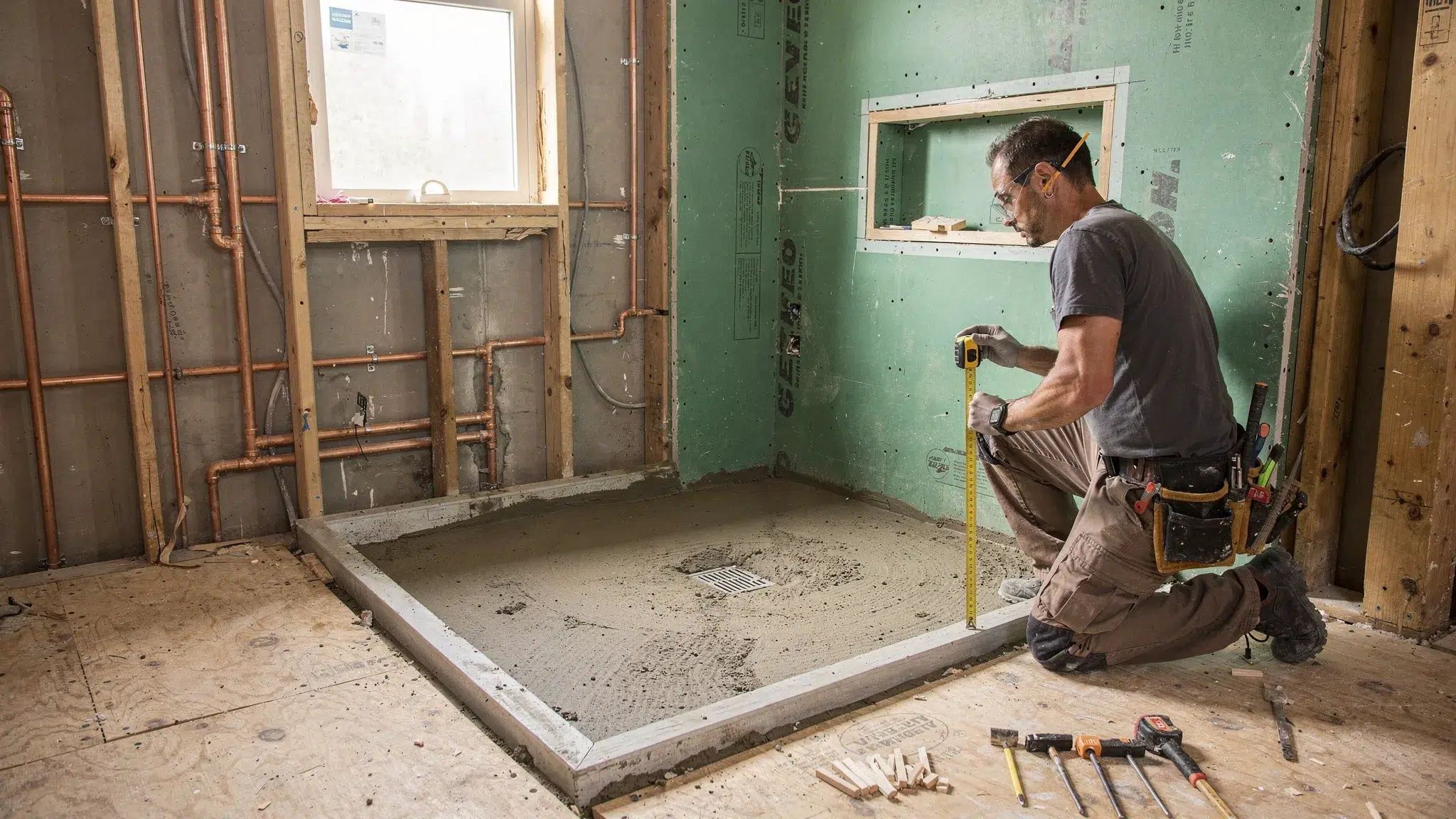
Waterproofing is hidden after tiling, which is why some homeowners underestimate it. This is one of the most expensive mistakes in bathroom remodeling. If waterproofing fails, damage can spread under tiles, into walls, through ceilings and into adjacent rooms.
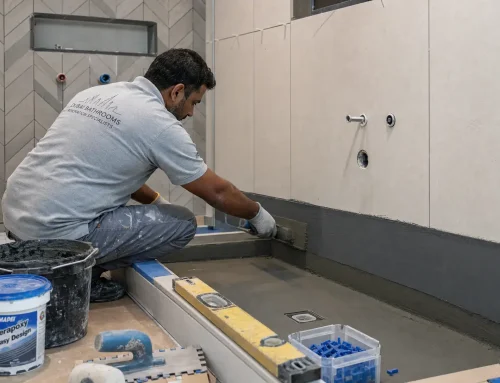
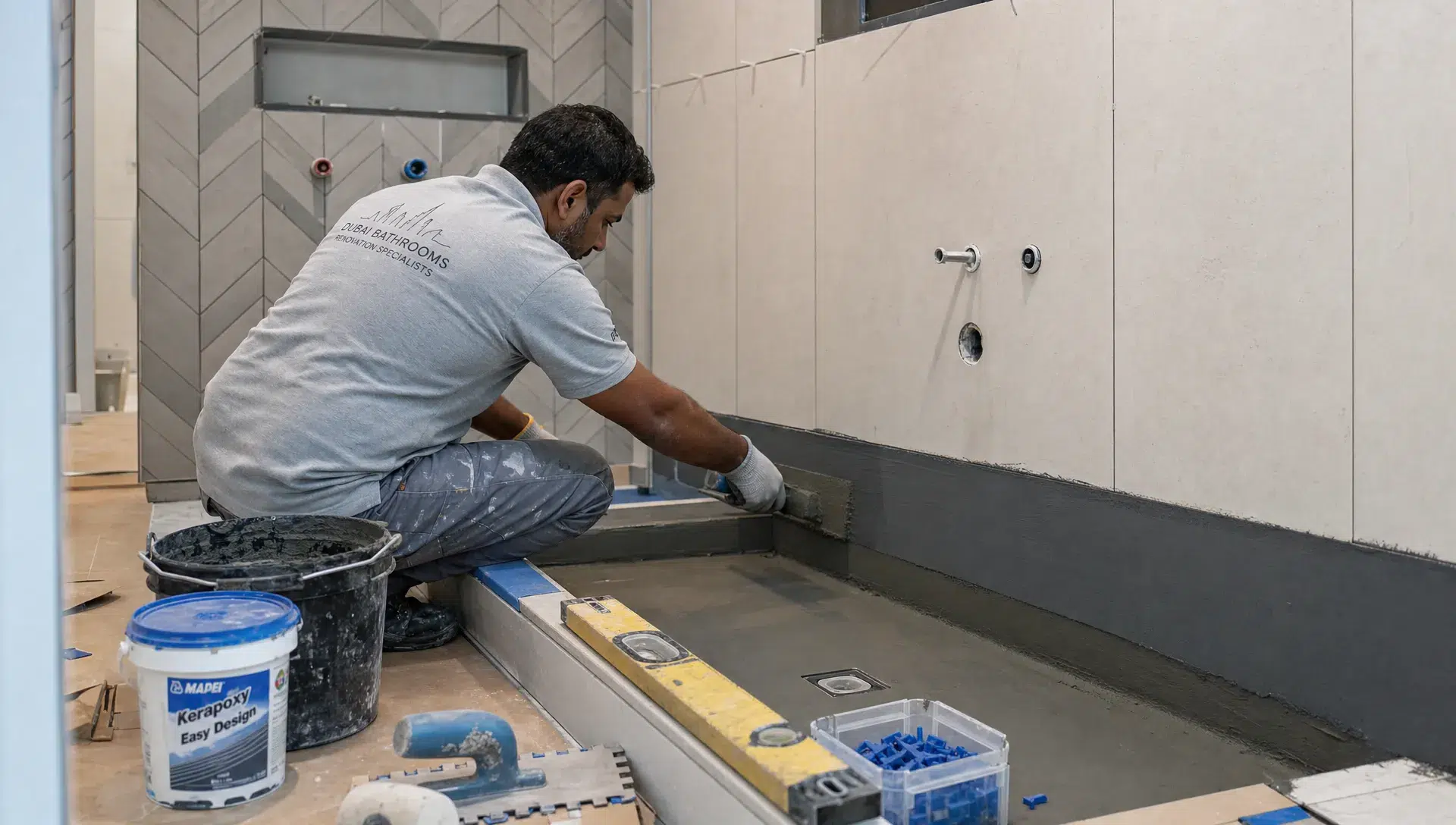
Proper waterproofing is not just a coating on the floor. It should account for floor and wall junctions, shower corners, pipe penetrations, drain areas, shower niches, thresholds and any place where water can collect. The substrate should be prepared correctly, and the system should be compatible with the tile adhesive and finishing materials.
For wet areas such as walk-in showers, ask your contractor how waterproofing will be applied and whether testing is part of the process before tiling begins. You do not need to micromanage the technical work, but you should know that it has been planned and priced properly.
Saving a small amount on waterproofing can cost far more later in tile removal, leak tracing, ceiling repairs and repainting.
Mistake 5: Choosing tiles and finishes only by appearance
Tiles define the look of the bathroom, but they also affect safety, cleaning and durability. A polished tile that looks stunning in a showroom may become slippery in a wet shower. A dark grout may hide marks, while a very light grout may need more frequent cleaning. Natural stone can feel luxurious, but some stones need sealing and more careful maintenance.
Dubai bathrooms also deal with hard water marks, humidity, frequent AC use and daily cleaning products. Your material choices should suit your lifestyle, not only your mood board.
| Finish choice | Common mistake | Better approach |
|---|---|---|
| Floor tiles | Selecting glossy tiles for wet areas | Choose bathroom-appropriate slip resistance |
| Wall tiles | Choosing oversized tiles without checking wall levels | Confirm substrate preparation and tile wastage |
| Natural stone | Ignoring sealing and maintenance needs | Ask about porosity, staining and care requirements |
| Grout | Choosing color only by style | Consider cleaning, water exposure and joint width |
| Vanity tops | Selecting material without water resistance | Choose finishes suited to splashes and daily use |
| Fittings | Buying based on looks only | Confirm compatibility, warranty and spare parts access |
If you want a luxury look, you do not always need the most delicate material. High-quality porcelain, well-designed lighting and good detailing can create a premium result with easier maintenance.
Mistake 6: Forgetting ventilation and humidity control
A bathroom can be beautifully tiled and still feel unpleasant if steam, odors and moisture are not managed properly. Poor ventilation can lead to mold, peeling paint, damp smells, swollen cabinetry and stained ceilings.
This matters in Dubai because humidity can be high, especially in coastal areas and high-rise apartments. Bathrooms without effective exhaust or airflow can trap moisture long after showers are used.
The US Environmental Protection Agency notes that controlling moisture is key to controlling mold. In practical bathroom design, this means planning a suitable exhaust path, using moisture-resistant finishes, allowing air movement under or around doors where appropriate and choosing cabinetry materials that can handle bathroom conditions.
Do not leave ventilation as an afterthought. Confirm where the exhaust will go, how the ceiling design affects airflow and whether the fan capacity is suitable for the room size and usage.
Mistake 7: Planning lighting and electrical points too late
Lighting is often decided after tiles and mirrors are selected, but by then it may be too late to create the best result without rework. Bathrooms need layered lighting: general ceiling lighting, task lighting around the mirror and sometimes soft accent lighting for a spa-like feel.
Electrical safety is also critical. Wet areas need appropriate fittings, safe installation and protection according to the applicable standards. Your contractor and electrician should specify suitable fixtures for bathroom zones, including IP-rated lights where needed.
Think about the details before tiling begins. Do you want a backlit mirror? A shaver socket? A heated mirror pad? LED niches? A smart switch? Wall lights beside the vanity? These choices affect wiring, wall preparation and mirror dimensions.
Good lighting makes the bathroom easier to use and more luxurious. Poor lighting can make even expensive finishes look flat.
Mistake 8: Forgetting storage, access panels and maintenance
Minimalist bathrooms look clean, but they can become inconvenient if there is nowhere to store daily essentials. Many remodels focus on the shower, tiles and vanity top, then forget practical storage for towels, toiletries, cleaning products and spare supplies.
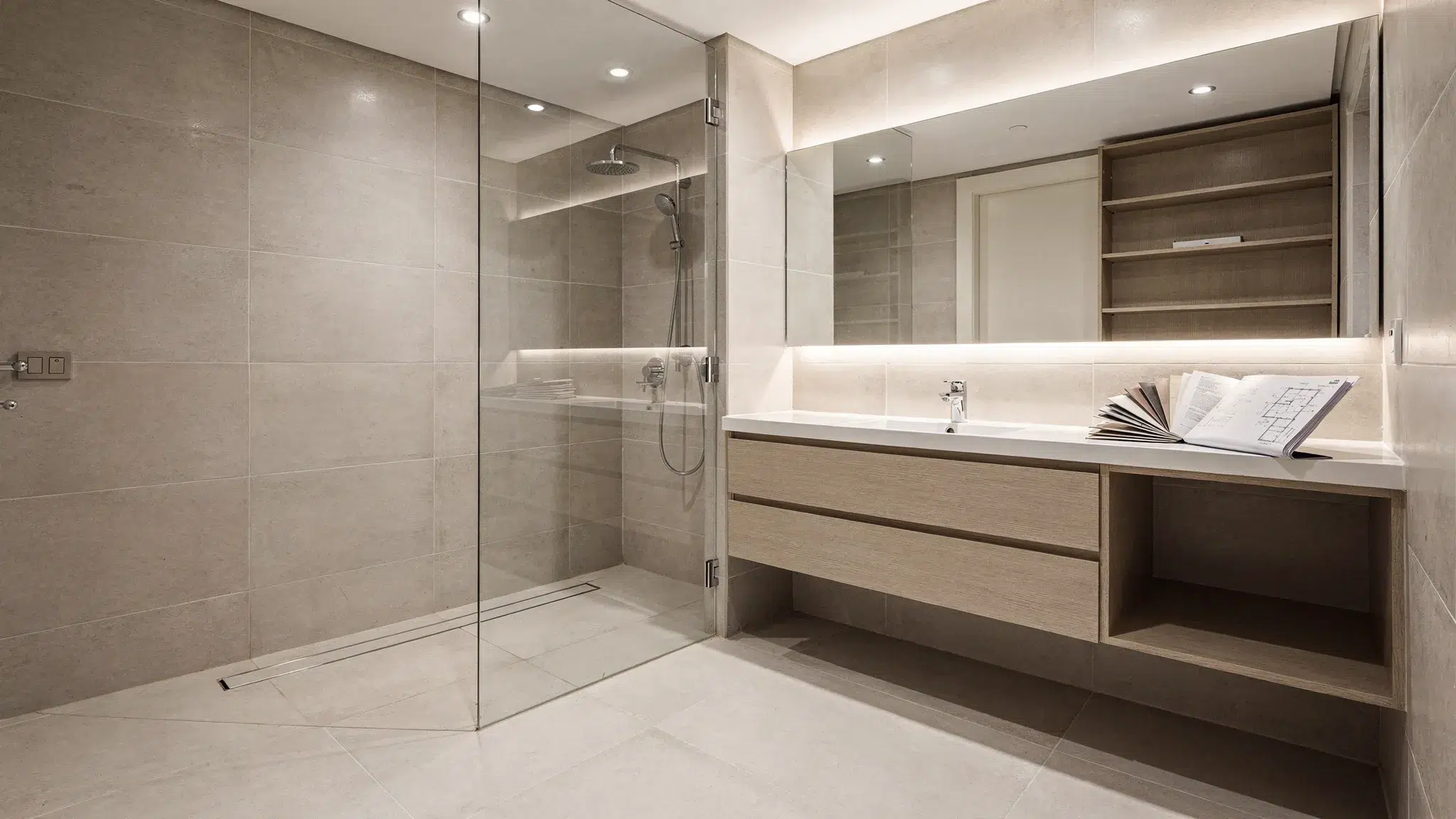
Plan storage around how you actually use the bathroom. A floating vanity with drawers may be more useful than open shelves. A recessed niche can keep shower products off the floor. A mirrored cabinet can hide small items without taking extra space.
Maintenance access is just as important. Concealed cisterns, valves, water heaters, traps and plumbing connections should be reachable when needed. A bathroom with no access panels may look seamless on day one, but it can become expensive to repair if a valve leaks or a fitting needs replacement.
The best bathroom remodeling balances clean design with long-term serviceability.
Mistake 9: Setting the budget after choosing materials
Some homeowners choose sanitaryware, tiles, mixers and accessories first, then try to fit the construction work into whatever budget remains. This creates pressure to cut corners on waterproofing, plumbing, electrical work or skilled labor.
A better approach is to build the budget from the full scope. A bathroom remodeling budget should consider demolition, disposal, plumbing, drainage, electrical work, waterproofing, ceiling work, tile installation, sanitaryware, fixtures, glass partitions, vanity, painting, accessories, approvals and final cleaning.
It is also sensible to keep a contingency for hidden issues. Older bathrooms may reveal damaged pipes, uneven walls, poor previous waterproofing or ceiling problems after demolition. Without a contingency, every discovery becomes stressful.
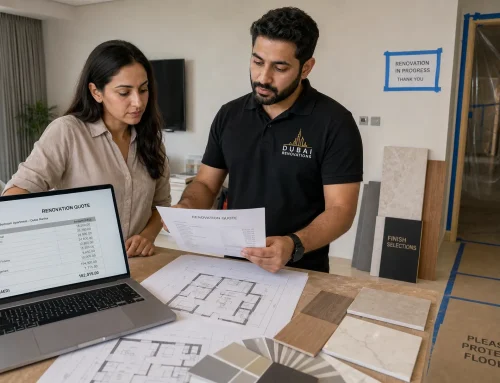
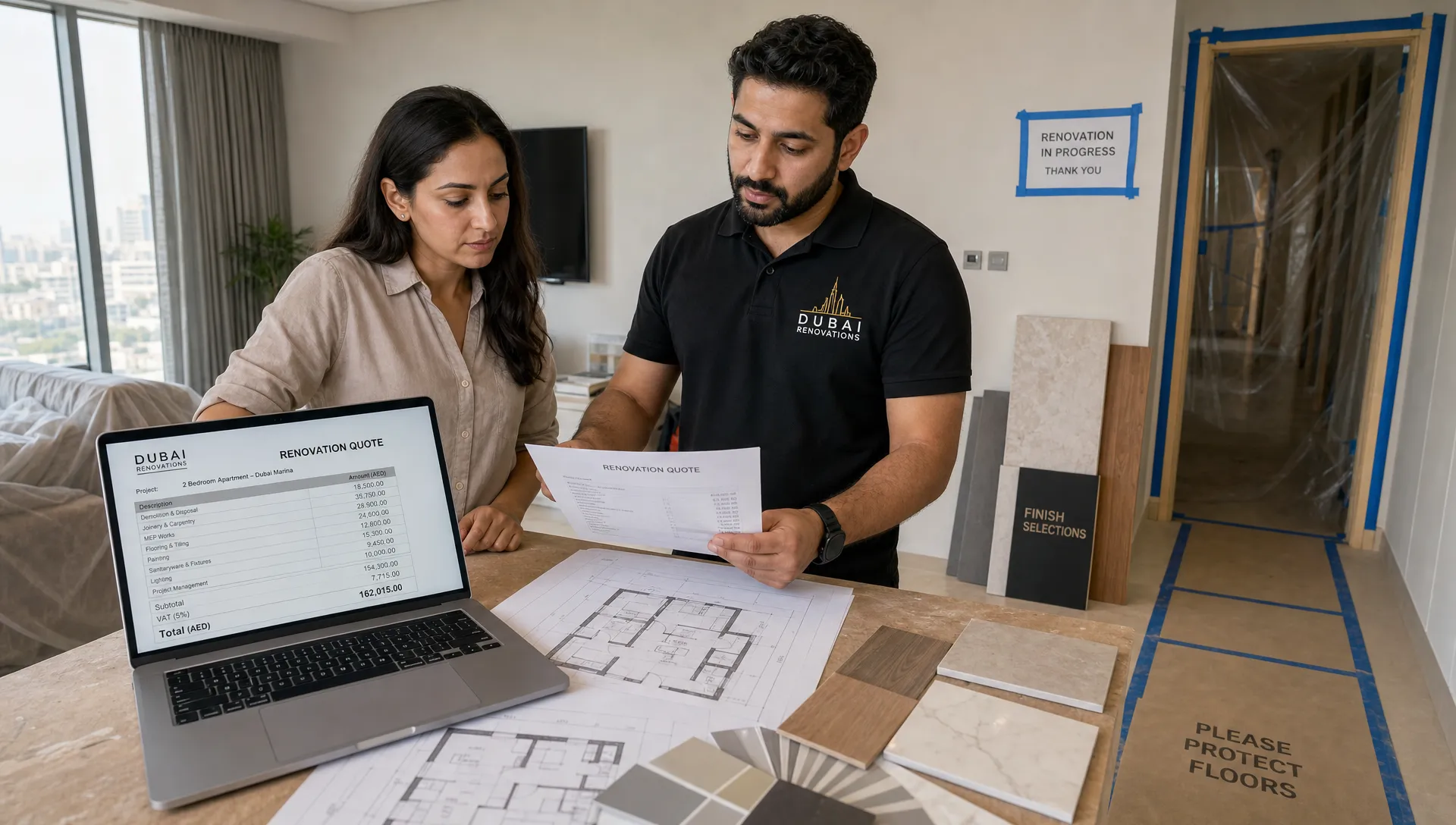
A detailed quote may look higher than a vague quote at first, but it is usually safer. The cheapest number often excludes important items that appear later as variations.
Mistake 10: Choosing a contractor based only on the lowest quote
Bathroom remodeling is technical work. The wrong contractor can leave you with leaks, poor tile alignment, weak drainage, unsafe electrical work or a finish that deteriorates quickly.
When comparing contractors, look beyond the final price. Check whether the scope is detailed, whether materials are specified, whether plumbing and waterproofing are clearly included and whether the team understands approvals for Dubai properties.
A professional quote should make it easy to compare what is included and what is excluded. If one quote is much cheaper, ask why. It may be missing waterproofing, disposal, ceiling work, accessories, glass, plumbing upgrades or finishing details.
If you need a structured way to evaluate companies, read this guide on how to compare renovation companies in Dubai. Choosing the right team before work starts is one of the best ways to protect your budget and your home.
A pre-start checklist for smoother bathroom remodeling
Before demolition begins, make sure the key decisions are confirmed. This prevents delays, reduces variations and helps your contractor plan the work properly.
- Confirm the full scope of remodeling, including what stays and what changes.
- Check whether building management, developer or authority approvals are required.
- Review the plumbing and drainage plan before finalizing the layout.
- Confirm waterproofing areas, materials and testing process.
- Select tiles, sanitaryware and fittings early enough to avoid delays.
- Choose bathroom-safe lighting, switches and electrical points before tiling.
- Plan ventilation, exhaust and moisture-resistant finishes.
- Include storage, niches, towel rails and maintenance access in the design.
- Review the quote for exclusions, provisional items and possible variations.
- Keep a realistic contingency for hidden site conditions.
A bathroom may be a small room, but it needs careful coordination. The more decisions you make before work starts, the smoother the project will be.
Frequently Asked Questions
What is the biggest bathroom remodeling mistake to avoid? The biggest mistake is starting without a clear scope and technical inspection. Bathroom design must account for plumbing, drainage, waterproofing, ventilation and approvals before finishes are selected.
Do I need approval for bathroom remodeling in Dubai? It depends on your property, building rules and scope of work. Cosmetic upgrades may be simple, while plumbing changes, drainage relocation, structural work or MEP changes may require building management, developer or authority approval.
Should I buy tiles and sanitaryware before hiring a contractor? It is better to shortlist styles first, then confirm sizes, quantities and technical compatibility with your contractor. Buying too early can lead to wrong dimensions, installation issues or storage problems.
Can I remodel a bathroom while living in the home? Often yes, especially if you have another bathroom available. However, demolition, dust, noise, water shutoffs and access restrictions should be discussed before the project starts.
How can I reduce bathroom remodeling costs without reducing quality? Keep plumbing points in similar locations where possible, choose durable mid-range materials, avoid last-minute changes and get a detailed quote that includes waterproofing, plumbing and finishing work.
Plan your bathroom remodel with Best Renovation
A successful bathroom starts with the right planning. Best Renovation provides high-quality bathroom renovation and bathroom remodeling services in Dubai, including interior design, fit-out solutions, plumbing, carpentry, wall painting and finishing work.
If you want a bathroom that looks stylish, functions properly and is built for long-term use, explore our bathroom renovation services in Dubai or speak with the Best Renovation team about your project before you start.