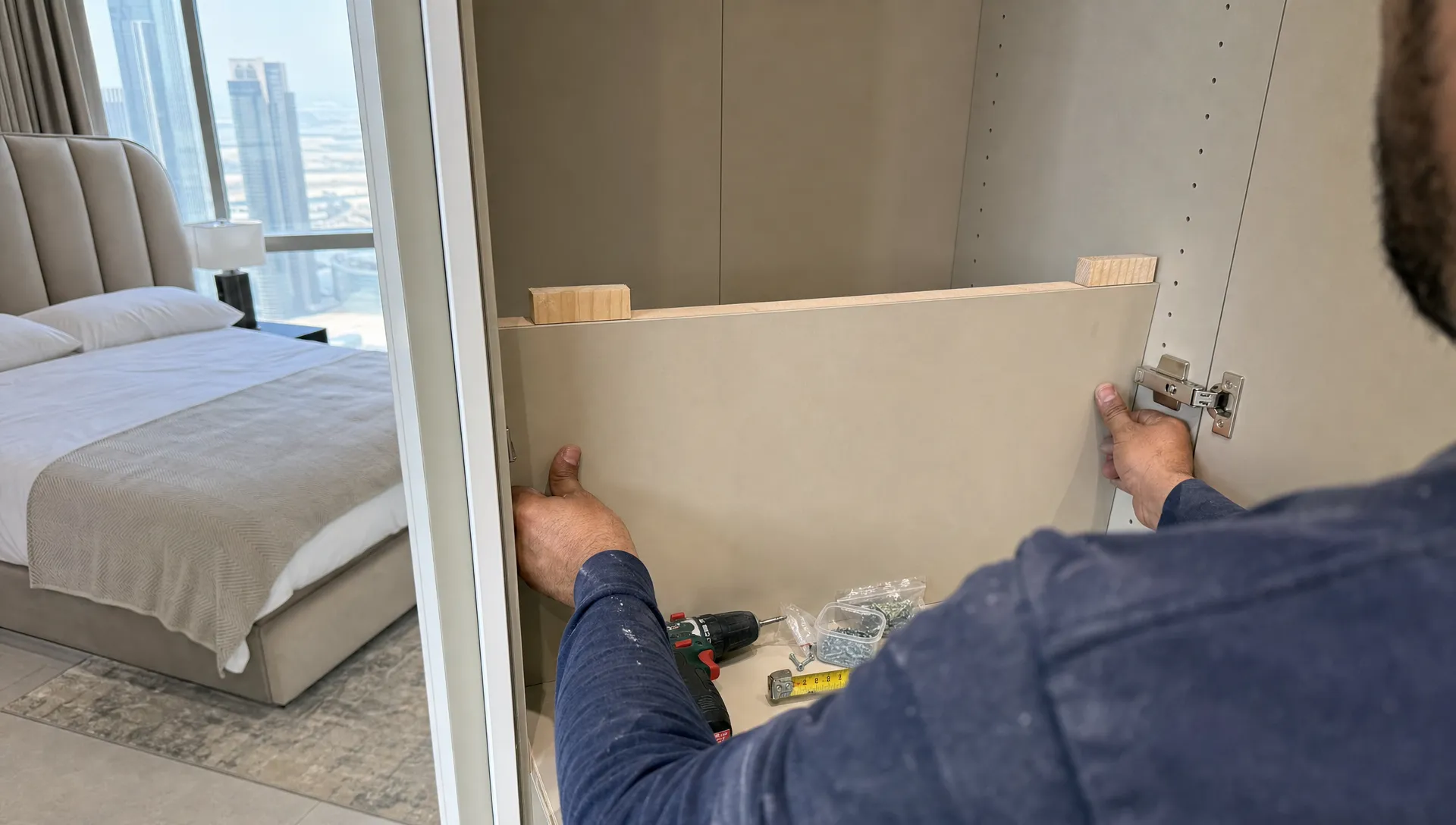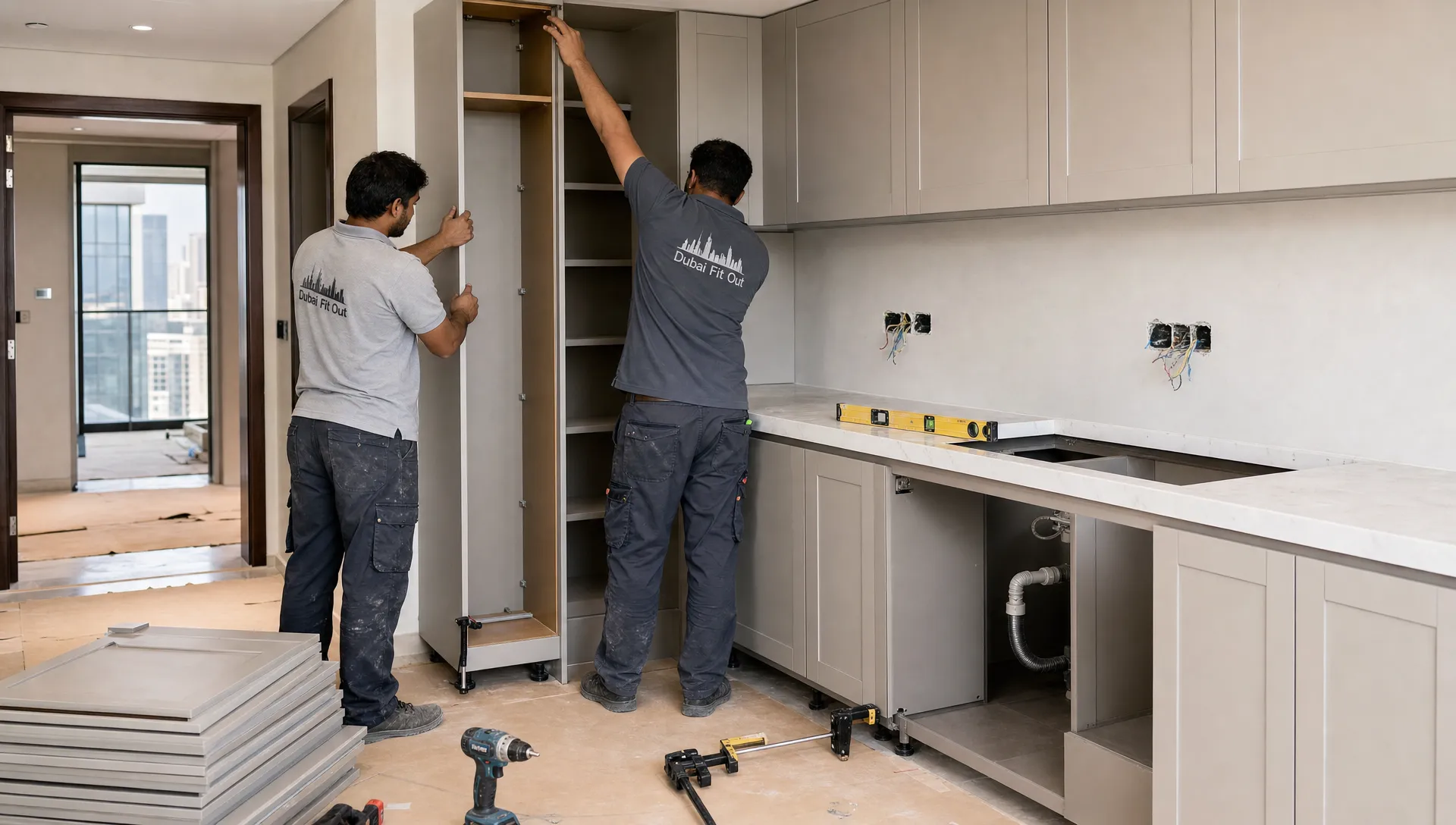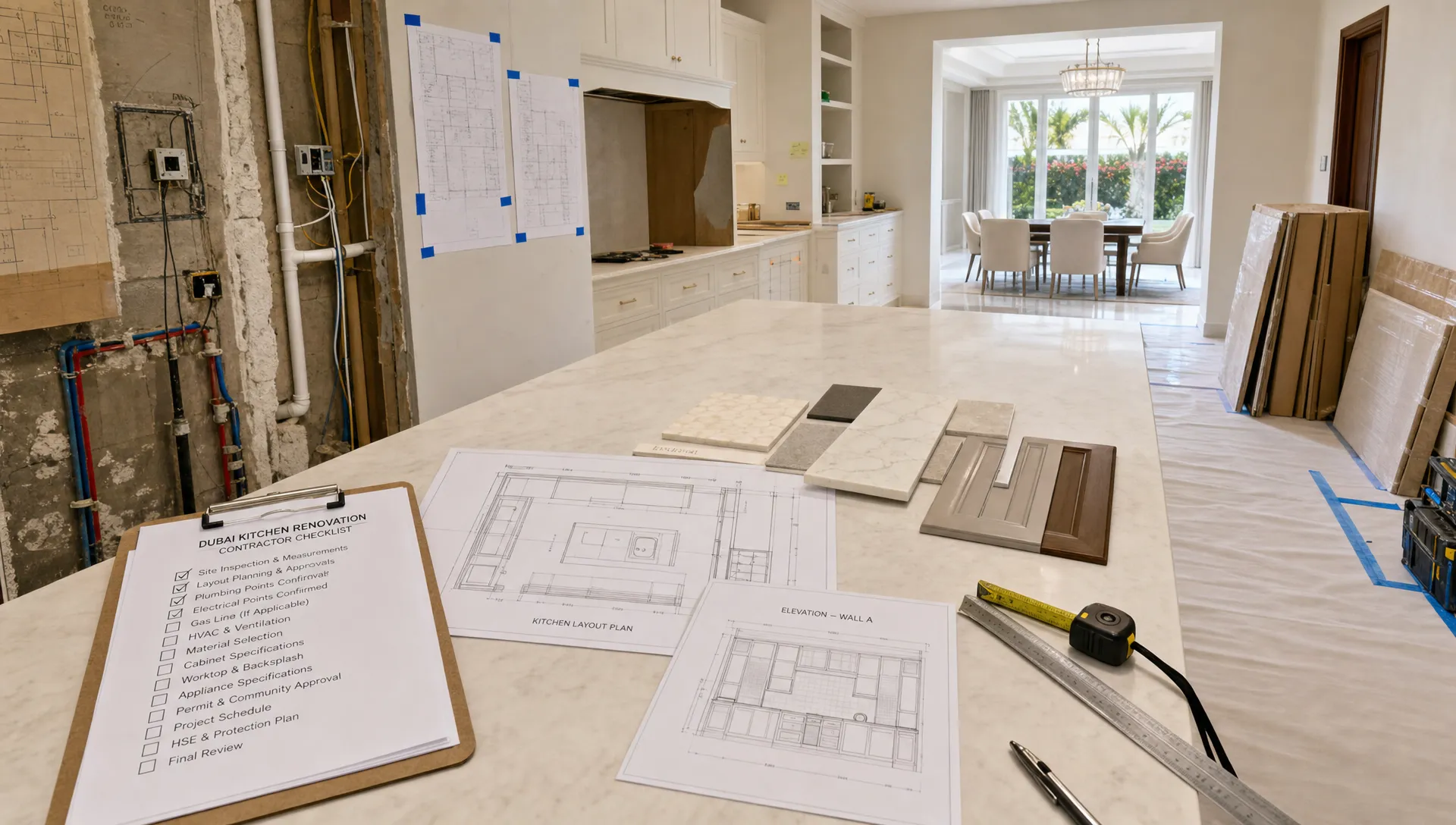
Planning a kitchen renovation can feel exciting at first, then quickly become overwhelming. You may know you want better storage, a brighter design, or a more open layout, but the real question is practical: kitchen renovation where to start, especially in Dubai homes where approvals, materials, climate, and building rules all matter?
The best place to start is not with cabinet colors or countertop samples. It is with a clear understanding of how your kitchen should work, what your property allows, and which decisions need to happen before demolition begins. A beautiful kitchen is only successful when the layout, plumbing, electrical, ventilation, lighting, and finishes all support your daily life.
This guide walks you through the right starting point for a kitchen renovation in Dubai, so you can plan with confidence before speaking to contractors or buying materials.
Start With the Way You Actually Use the Kitchen
Before thinking about design styles, ask how the kitchen needs to function. A kitchen for a couple in a Downtown Dubai apartment is very different from a family kitchen in a villa in Arabian Ranches, Jumeirah, or Dubai Hills. Some homeowners cook daily, some entertain often, and others mainly want a polished, easy-to-maintain space that supports a busy lifestyle.
Start by observing your current kitchen for a few days. Notice what frustrates you. Is the fridge too far from the prep area? Do small appliances crowd the counter? Is there enough storage for bulk groceries? Does the kitchen feel isolated when guests are over? These everyday problems are the foundation of a good renovation brief.
A simple renovation goal might be: “I want more storage, better lighting, and a family-friendly breakfast counter.” A more complex goal might be: “I want to convert a closed kitchen into a semi-open kitchen while upgrading plumbing, electrical points, flooring, and cabinetry.” The clearer your goal, the easier it becomes to control budget, timeline, and design decisions.
Understand Your Home Type and Its Renovation Limits
Dubai homes vary widely, and your starting point depends heavily on whether you live in an apartment, townhouse, or villa. Apartments often have more restrictions around plumbing relocation, exhaust routes, noise timings, service elevators, and building management approvals. Villas usually offer more flexibility, but major layout changes may still require community or authority approvals depending on the property and scope.
Before planning any major change, confirm the practical constraints of your home. These may include existing drainage points, load-bearing walls, ceiling heights, AC vents, gas lines, electrical capacity, and access for material delivery. Moving a sink or cooker may look simple on a drawing, but it can affect drainage slope, waterproofing, ventilation, and authority requirements.
For Dubai homeowners, this early technical review is one of the smartest ways to avoid expensive redesigns later. It helps separate “nice to have” ideas from changes that are genuinely feasible.
Define the Scope Before Choosing Finishes
Many homeowners start with finishes because they are visible and fun to choose. But your first major decision should be scope. Are you refreshing the kitchen, remodeling part of it, or doing a full renovation?
| Renovation scope | What it usually includes | Best for |
|---|---|---|
| Cosmetic refresh | Painting, hardware, lighting upgrades, minor repairs | Kitchens with a good layout and working services |
| Partial remodel | New cabinets, countertops, backsplash, sink, appliances, selected MEP changes | Kitchens that function reasonably well but look outdated |
| Full renovation | New layout, demolition, cabinetry, plumbing, electrical, flooring, lighting, ventilation, finishes | Kitchens with poor layout, aging services, or major lifestyle changes |
Defining scope early keeps the project realistic. A full renovation requires more planning, more coordination, and usually more approvals than a surface-level update. It also needs a better sequence, because plumbing, electrical, waterproofing, flooring, and joinery must be planned together.
If you already know you need a complete transformation, reviewing professional kitchen renovation services in Dubai can help you understand the types of design, fit-out, carpentry, plumbing, flooring, and finishing work typically involved.
Set a Budget Range With a Contingency
A kitchen renovation budget should not be built around one showroom quote. It should include design, demolition, disposal, plumbing, electrical work, cabinetry, countertops, backsplash, flooring, lighting, appliances, painting, and finishing details. If your project involves layout changes, also account for approvals, waterproofing, ventilation adjustments, and potential hidden issues behind walls or under floors.
In renovation planning, a contingency of around 10% to 15% is commonly used for unexpected costs. This is especially helpful in older Dubai properties where concealed plumbing, uneven floors, water damage, or outdated wiring may only become visible after demolition.
Think of your budget in priorities. If you cook daily, invest in durable worktops, reliable hardware, good task lighting, and practical storage. If the kitchen is part of an open-plan living area, finishes, cabinetry proportions, and lighting design may carry more visual importance. The goal is not to spend everywhere, but to spend where it improves daily use and long-term durability.
Decide on the Layout Before Materials
The layout affects everything else. Once the layout is wrong, even premium finishes cannot make the kitchen feel comfortable. A good layout reduces unnecessary movement, supports safe cooking, and keeps storage close to where items are used.
The classic kitchen work triangle between the sink, hob, and fridge is still useful, but modern Dubai homes often need more than that. Open kitchens may require an island that works for prep, casual dining, and entertaining. Family kitchens may need breakfast seating, pantry storage, and easy-clean surfaces. Compact apartments may benefit from tall cabinets, integrated appliances, and lighter colors to make the space feel larger.
Common kitchen layouts include straight-line kitchens, L-shaped kitchens, U-shaped kitchens, galley kitchens, island kitchens, and semi-open kitchens with glass partitions or breakfast counters. For more inspiration on practical layouts and family-focused design, you can explore these kitchen remodeling ideas for modern Dubai living.
Choose Materials for Dubai Conditions
Dubai kitchens need materials that handle heat, humidity, AC temperature changes, frequent cleaning, and daily wear. A finish that looks beautiful in a showroom may not be the best choice if it stains easily, swells with moisture, or requires delicate maintenance.
For countertops, many homeowners consider quartz, porcelain, granite, or solid surfaces depending on the desired look and level of use. For cabinetry, moisture-resistant boards, quality hinges, strong drawer runners, and proper edge sealing are important. For flooring, porcelain tiles are popular because they are durable, easy to clean, and suitable for high-use areas.
Ventilation is also essential. In homes where cooking is frequent, especially with spices, frying, or grilling, a properly planned extractor and good airflow help reduce odors and grease buildup. Lighting should combine general ceiling lighting, task lighting under cabinets, and accent lighting where appropriate.
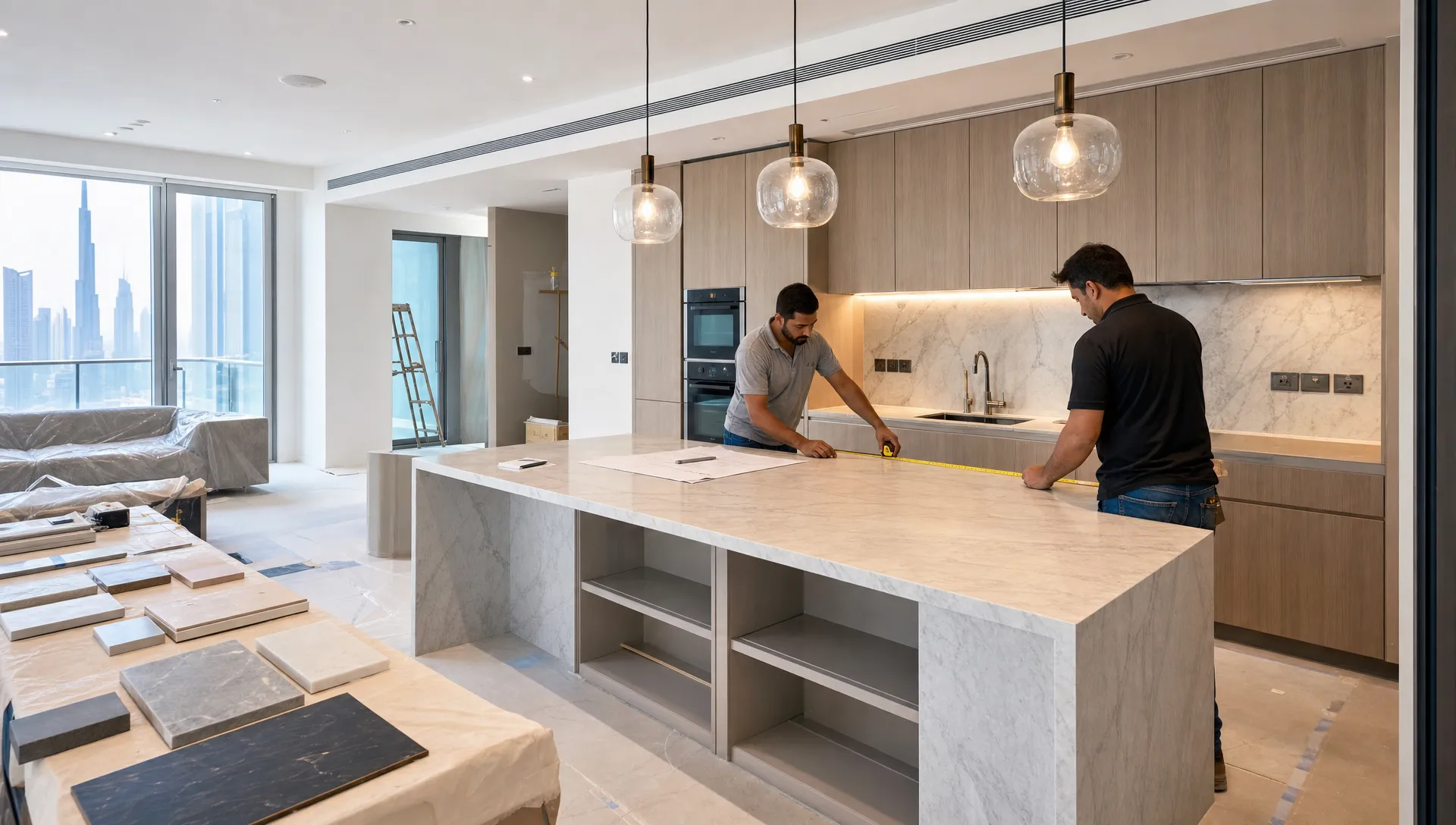
Plan Plumbing, Electrical, and Ventilation Early
The technical work behind the walls is what makes a kitchen safe and reliable. Before demolition begins, your contractor should map out plumbing supply lines, drainage, electrical sockets, appliance points, lighting circuits, cooker requirements, and ventilation routes.
Do not leave appliance decisions too late. The size and type of fridge, oven, hob, dishwasher, washing machine, and extractor can affect cabinetry dimensions, socket positions, water supply, drainage, and ventilation. Even small details, such as where you want a coffee machine or air fryer, can influence socket placement.
In Dubai apartments, drainage relocation can be especially sensitive because slopes and shared service areas may limit what is possible. In villas, there may be more flexibility, but changes still need proper waterproofing and professional installation. Good planning at this stage prevents leaks, overloaded circuits, awkward appliance gaps, and costly rework.
Check Approvals Before Work Starts
Approvals are one of the biggest differences between a casual design idea and a real renovation plan. Depending on your property, you may need approval from building management, an owners association, a master developer, or relevant local authorities. Requirements can vary by community, free zone, building, and project scope.
Minor cosmetic work may be straightforward, while demolition, plumbing relocation, electrical changes, gas work, structural changes, or changes affecting common services may require more formal review. Your contractor should help identify what is needed before work begins.
Do not treat approvals as an afterthought. Starting work without the correct permissions can cause delays, fines, access issues, or forced changes. It can also create problems when selling or leasing the property later.
Choose the Right Contractor and Design Team
Once your scope, budget, and technical needs are clear, choosing the right contractor becomes easier. Look for a team that understands Dubai homes, communicates clearly, and can coordinate design, carpentry, plumbing, electrical, flooring, painting, and fit-out work.
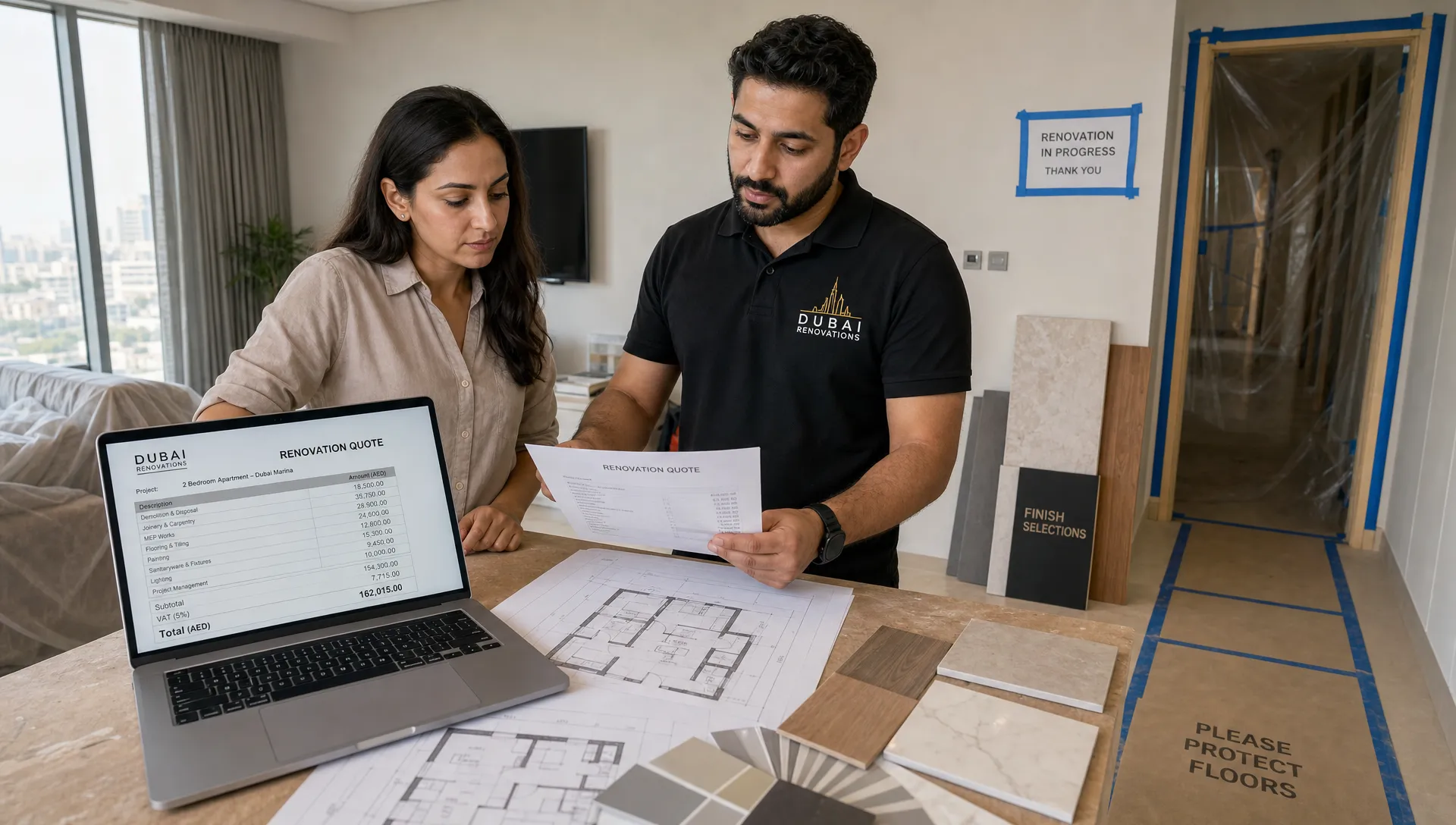
A good contractor should ask practical questions before giving a final proposal. They should inspect the site, understand your lifestyle, check services, discuss materials, and explain the sequence of work. Be cautious of vague quotes that do not specify materials, quantities, exclusions, or responsibilities.
Choosing renovation professionals is a high-trust decision, much like hiring critical business talent. In corporate settings, companies often use specialist partners such as international executive search recruitment agencies when expertise and fit determine the success of a project. For your home, the same principle applies: the right specialists reduce risk, improve execution, and protect your investment.
Build a Realistic Renovation Timeline
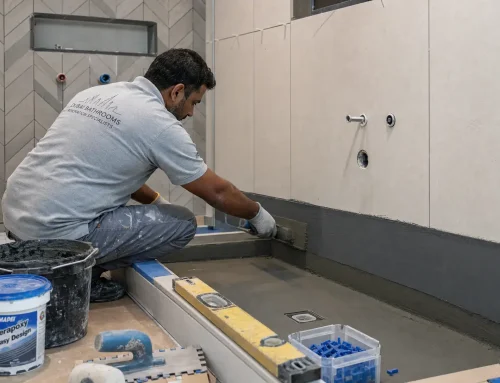
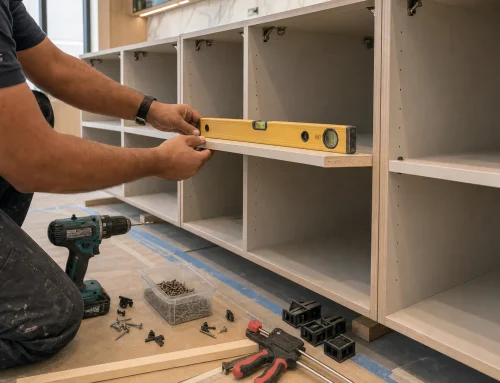
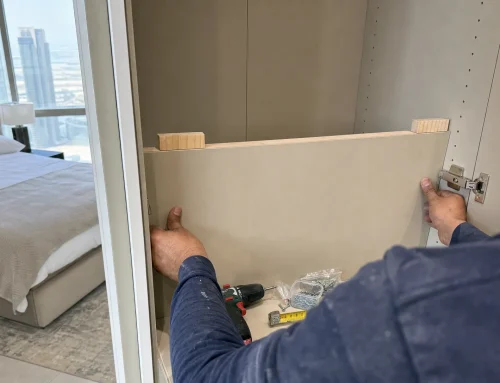
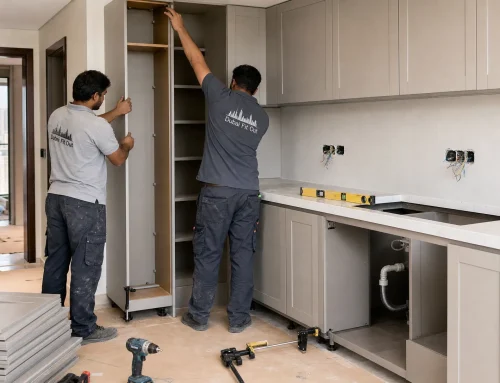
A kitchen renovation does not happen in one step. Even before physical work begins, there may be design development, material selection, approvals, shop drawings, measurements, and procurement. Once work starts, the sequence usually moves from protection and demolition to MEP work, plastering, flooring, cabinetry, countertop installation, backsplash, painting, appliance fitting, and final snagging.
Timeline depends on scope, material availability, approval speed, and site conditions. Custom cabinetry, imported finishes, and major layout changes can extend the schedule. To avoid stress, plan around your household routine. If the kitchen will be unusable, arrange a temporary cooking area or meal plan before demolition.
A clear schedule should include decision deadlines. If tiles, handles, appliances, or worktops are selected late, the entire project may slow down. Good renovation planning is not only about when contractors work, but also when homeowners make decisions.
Avoid the Most Common Starting Mistakes
Many kitchen renovation problems begin before the first tile is removed. Homeowners often rush into design choices without confirming measurements, approvals, or technical feasibility. Others accept the lowest quote without checking what is excluded.
The most common mistakes include changing the layout after work begins, underestimating electrical needs, choosing delicate materials for heavy-use kitchens, forgetting ventilation, ignoring storage planning, and not leaving budget for unexpected repairs. Another frequent issue is ordering appliances after cabinetry has already been designed, which can lead to awkward gaps or expensive adjustments.
To stay organized, use a structured planning document before committing to demolition. This complete kitchen renovation checklist is a useful next step once you have clarified your renovation goals and scope.
Your First 7 Steps Before Calling a Contractor
If you are still wondering where to start, keep it simple. Your first phase is about clarity, not final decisions.
- Measure your current kitchen and take photos from every angle.
- Write down what does not work in your current layout.
- Decide whether you need a refresh, partial remodel, or full renovation.
- List must-have items, such as island seating, pantry storage, or built-in appliances.
- Check your building or community rules for renovation permissions.
- Set a budget range and include a contingency.
- Speak with an experienced Dubai renovation contractor for a site assessment.
These steps will make your first contractor meeting more productive. Instead of asking for a vague estimate, you can discuss a clear goal, realistic constraints, and the best route forward.
Frequently Asked Questions
Kitchen renovation where to start in a Dubai apartment? Start by checking building management rules, service locations, and what changes are allowed. Apartments often have restrictions on plumbing relocation, ventilation, work timings, and material movement, so technical feasibility should come before design choices.
Should I choose appliances before designing cabinets? Yes, at least choose the appliance sizes and types early. Fridges, ovens, hobs, dishwashers, extractors, and washing machines affect cabinet dimensions, socket positions, water points, and ventilation planning.
Do I need approvals for a kitchen renovation in Dubai? It depends on the property and scope. Cosmetic updates may be simpler, but demolition, plumbing, electrical, gas, structural, or ventilation changes may require approvals from building management, developers, or relevant authorities.
What is the most important part of kitchen renovation planning? Layout and technical planning are the most important starting points. Once plumbing, electrical, ventilation, and workflow are properly planned, finishes and styling become much easier to choose.
How can I avoid overspending on my kitchen renovation? Define the scope early, prioritize essential upgrades, compare detailed quotations, avoid late design changes, and keep a contingency for hidden issues. Clear planning reduces costly rework.
Ready to Start Your Dubai Kitchen Renovation?
The right starting point is a clear plan: understand your daily needs, confirm your home’s technical limits, define the scope, set a realistic budget, and work with specialists who can manage the details.
Best Renovation provides kitchen remodeling, interior design, fit-out, plumbing, carpentry, wooden flooring, and painting services for Dubai homes. If you are ready to turn your kitchen ideas into a practical renovation plan, start with a professional site assessment and a clear design brief.