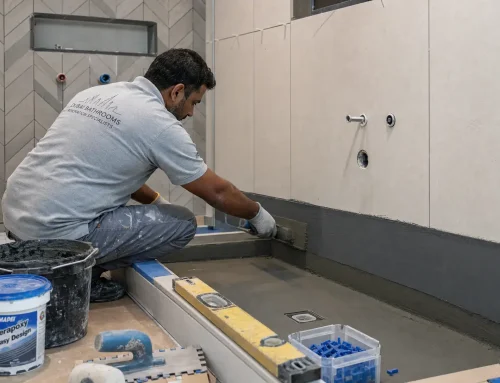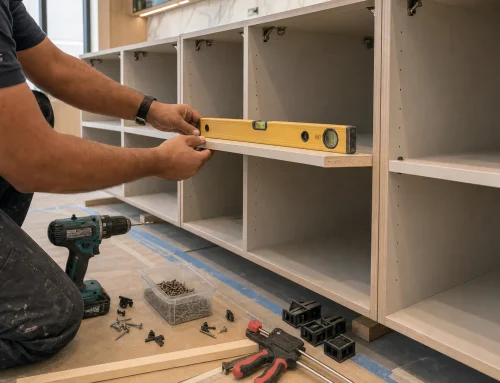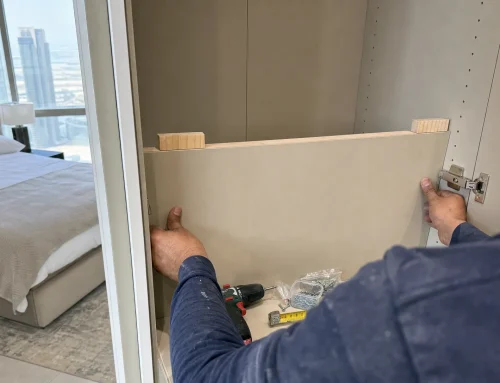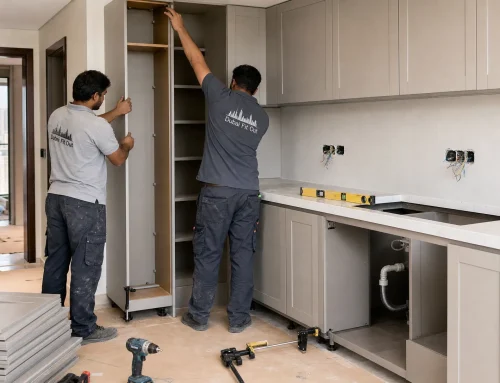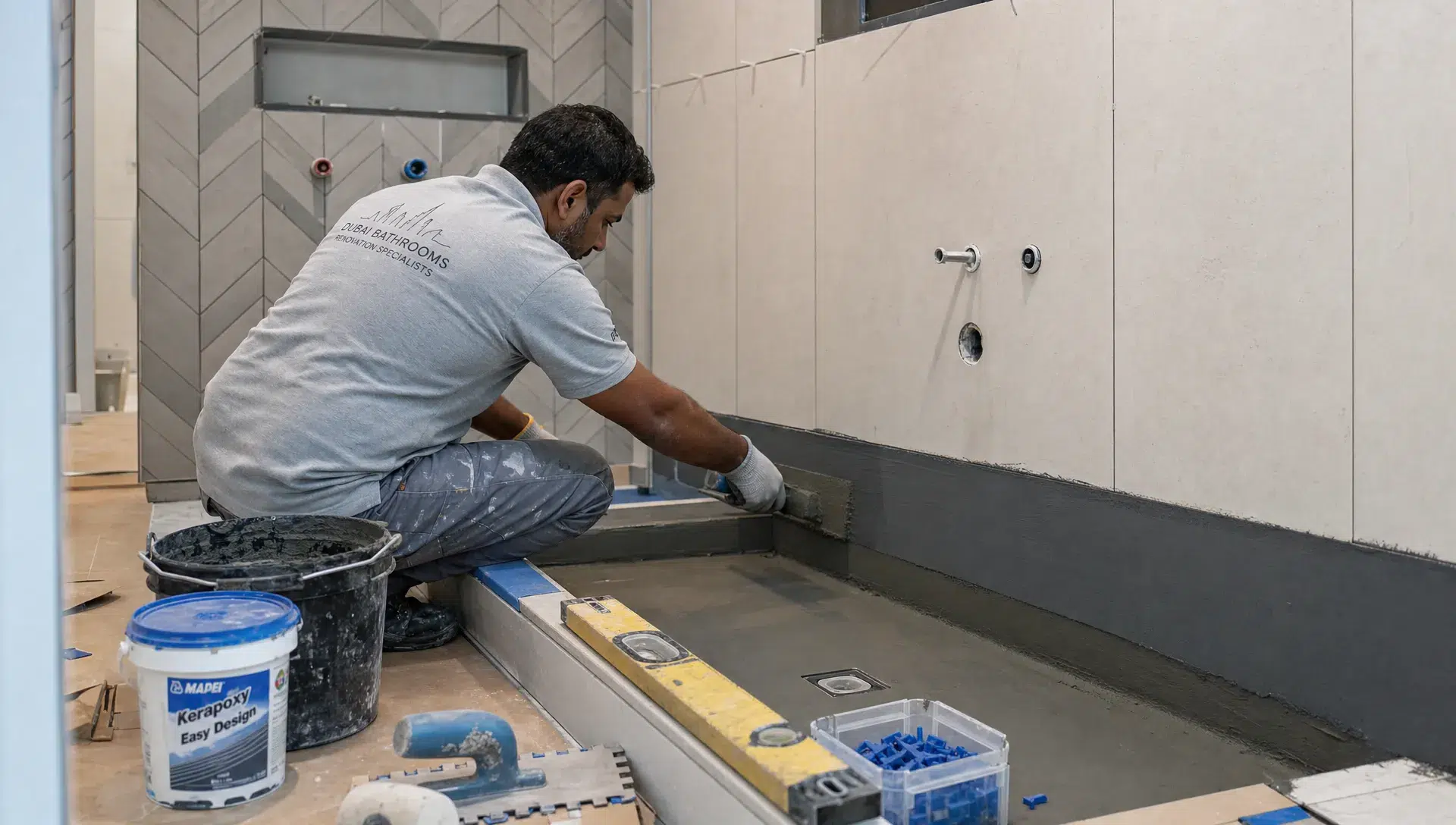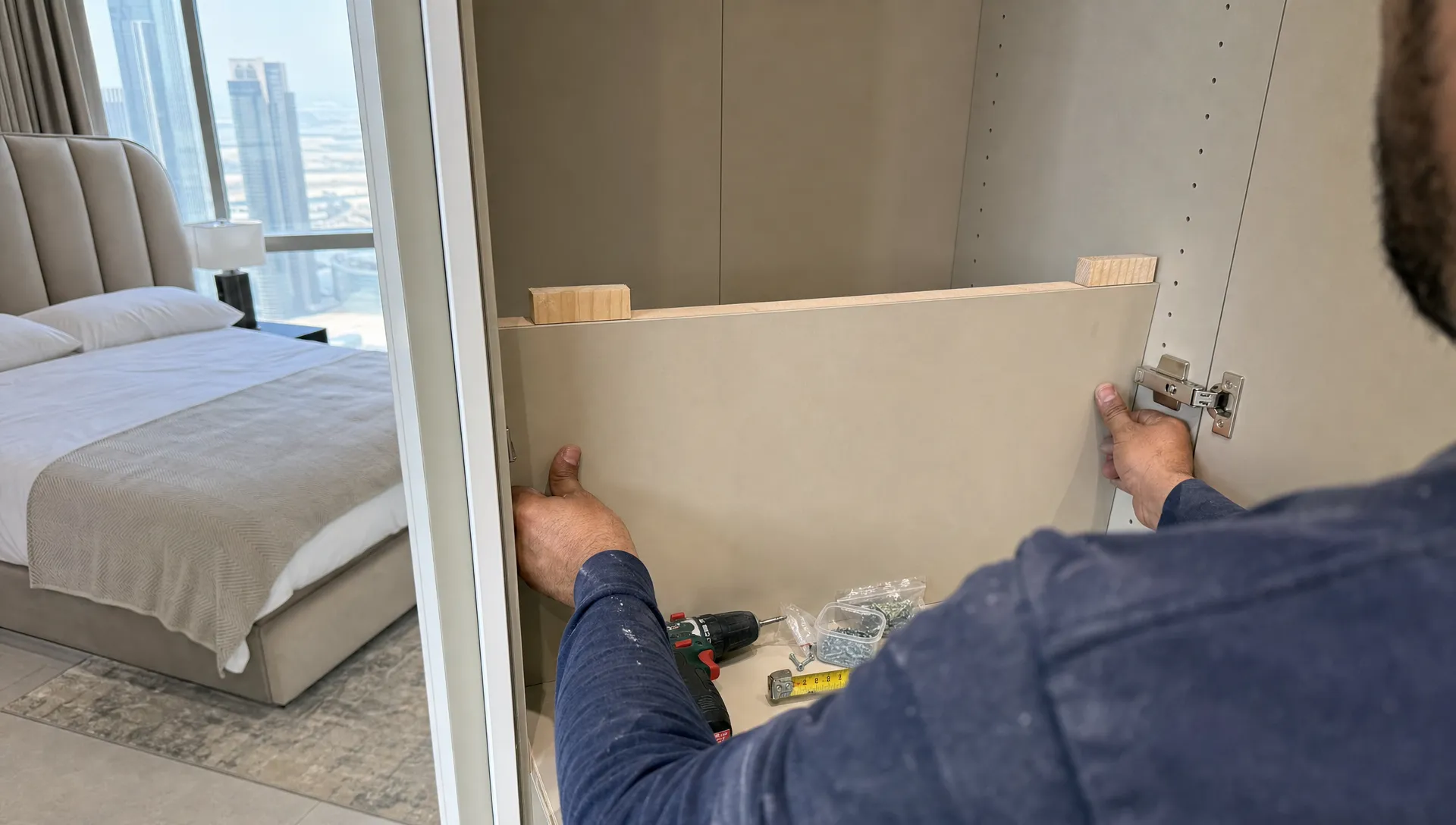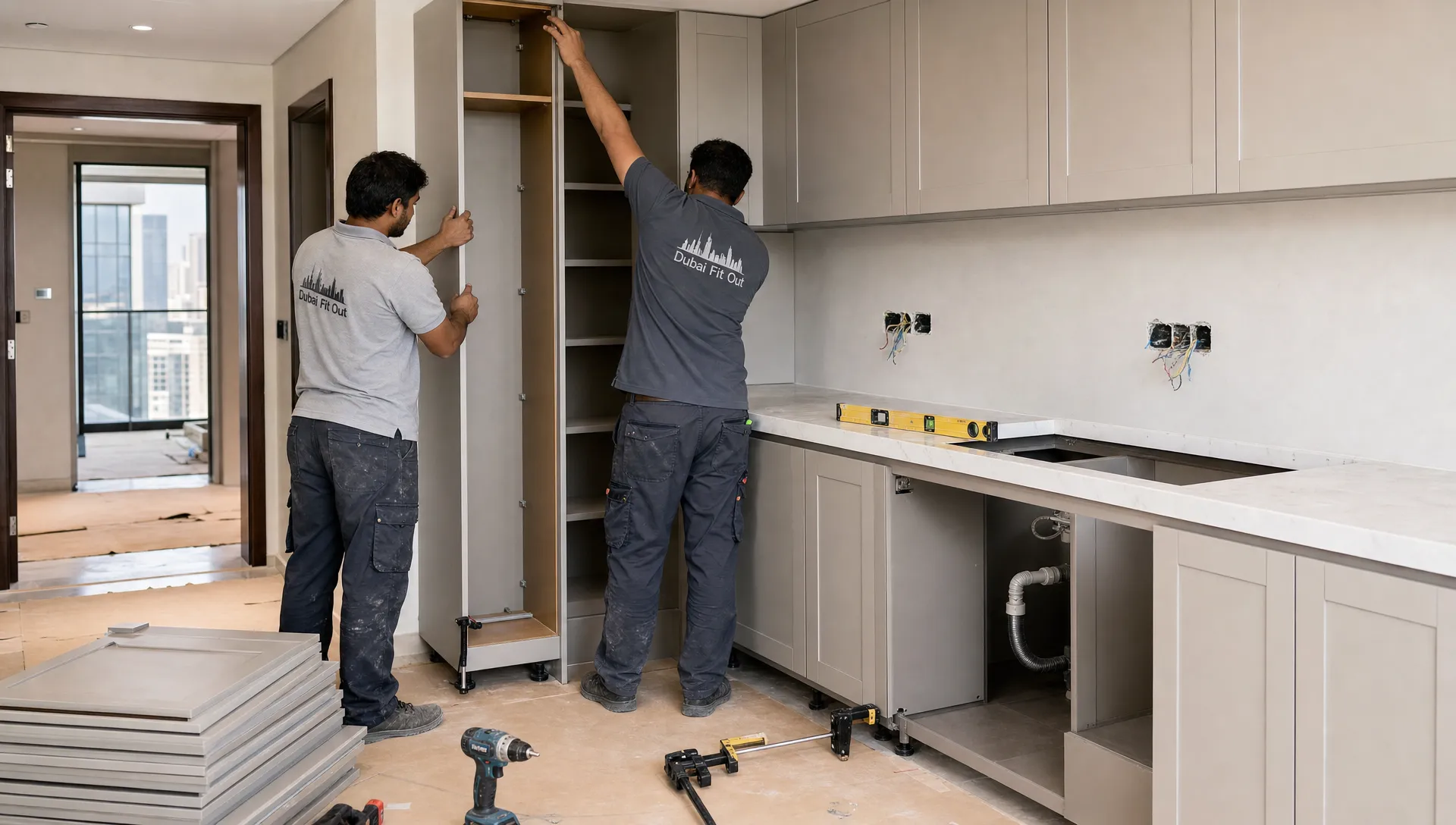
Hiring kitchen contractors is not only about finding someone who can install cabinets and tiles. In a Dubai home, the contractor may need to coordinate approvals, plumbing, electrical work, ventilation, joinery, countertops, appliances and building access rules. If the wrong details are missed before work starts, the renovation can become more expensive, more disruptive and slower than expected.
The best time to protect your budget is before you sign. Good questions reveal how a contractor plans, prices, communicates and solves problems on site. They also help you compare quotations fairly, because two contractors may describe the same kitchen renovation very differently.
If you are still defining the scope of your project, it is worth reviewing where to start with a kitchen renovation in Dubai homes before you begin contractor interviews. Once your basic brief is clear, use the questions below to separate organized kitchen contractors from risky ones.
Start with your own kitchen brief
Before asking contractors for prices, prepare a simple brief. It does not need to be a professional design document, but it should explain what you want to change, what must stay and how you use the kitchen every day.
Include your property type, apartment, townhouse or villa, along with the community or building if approvals may be involved. Note whether the kitchen is open-plan or enclosed, whether plumbing points need to move, which appliances you plan to keep and what style you prefer. Photos, rough measurements and inspiration images can also help.
A clear brief keeps the discussion practical. It also makes it harder for a contractor to give a vague estimate that later grows into a much higher final cost.
Have you completed kitchen projects like mine in Dubai?
Experience matters, but relevant experience matters more. A contractor who mainly works on small apartment refreshes may not be the best fit for a full villa kitchen renovation involving structural changes, new MEP points and custom joinery.
Ask for examples of similar projects. Focus on property type, kitchen size, layout complexity and finish level. If your home is in a managed building or gated community, ask whether they have worked under similar access and approval rules.
A confident contractor should be able to explain what was challenging in previous kitchens and how they handled it. Be cautious if they only show beautiful finished photos but cannot talk through the actual process, such as demolition, waterproofing, electrical loads, cabinet installation or appliance coordination.
What approvals, NOCs or building permissions may be needed?
Dubai kitchen renovations can involve more than homeowner approval. Depending on your property, you may need permission from building management, the developer, the community management company or the relevant authority. This becomes especially important if the work affects plumbing, drainage, gas, electrical points, walls, ventilation or common building services.
Ask the contractor which approvals are usually required for your type of property and who will prepare the documents. A professional answer should mention drawings, method statements, work schedules, contractor documents and coordination with building management when necessary.
Do not accept a casual promise that approvals are never needed. Even if a minor cosmetic upgrade requires no formal permit, the contractor should still know the difference between painting cabinets and relocating plumbing lines.
Who will handle design, measurements and layout planning?
A kitchen can look good on a mood board but fail in daily use if the measurements are wrong. Before hiring kitchen contractors, ask how they confirm site dimensions, cabinet clearances, appliance sizes, countertop depths and door swing directions.
The contractor should explain whether they provide layout drawings, 3D views, material samples or shop drawings for custom joinery. For a more complex renovation, drawings are not a luxury. They reduce errors and help you understand what you are approving.
Also ask how the layout will improve storage, cooking flow and lighting. A good kitchen renovation is not just about replacing old finishes. It should make the space easier to use, cleaner to maintain and better suited to your household.
What is included in the quotation?
This is one of the most important questions to ask kitchen contractors before hiring. A low quote may look attractive because it leaves out major items. Another contractor may seem more expensive because the quotation includes demolition, disposal, plumbing, electrical work, countertop installation, backsplash, painting and final cleaning.
Ask for a detailed quotation that separates labor, materials, joinery, countertops, appliances, MEP work and any provisional sums. If something is not included, it should be clearly marked as excluded.
| Quote item | What to ask | Why it matters |
|---|---|---|
| Demolition and disposal | Is removal of old cabinets, tiles and debris included? | Waste removal can add cost and coordination issues. |
| Cabinets and joinery | What material, finish, hardware and internal accessories are included? | Cabinet quality affects durability and daily use. |
| Countertops | What material, thickness, edge profile and installation method are included? | Small specification changes can change the price significantly. |
| MEP work | Are plumbing, electrical and ventilation changes included? | These works affect safety, approvals and long-term performance. |
| Painting and finishing | Are wall repairs, touch-ups and final paint included? | Unclear finishing scope often causes disputes near handover. |
| Warranty | What is covered after completion and for how long? | A clear warranty shows accountability after payment. |
When comparing quotations, compare scope first and price second. If two quotes are far apart, ask each contractor to clarify assumptions instead of choosing the cheapest immediately.
Which materials and brands are you specifying?
Kitchen materials work hard in Dubai homes. Heat, humidity, cooking oil, cleaning products and daily movement all test cabinets, hinges, flooring, countertops and wall finishes.
Ask exactly what materials the contractor is using. For cabinets, clarify carcass material, shutter finish, edge banding, hinge brand, drawer runners and moisture resistance. For countertops, ask about stain resistance, heat tolerance, seams and maintenance. For flooring, ask whether the chosen surface can handle spills and frequent cleaning.
You do not need to choose the most expensive material in every category. You do need to know what you are buying. If a contractor only says premium quality without specifications, ask for the actual product names or samples.
How will plumbing, electrical and ventilation be managed?
Kitchen renovation often depends on work hidden behind cabinets and walls. Plumbing points, drainage slopes, appliance sockets, lighting circuits, water filtration, exhaust systems and gas connections must be planned before cabinets are manufactured.
Ask whether licensed specialists will handle plumbing and electrical work. Also ask how the contractor checks existing services before demolition. In older properties, hidden issues can appear once cabinets or tiles are removed, so you need to know how these surprises will be documented and priced.
For electrical planning, discuss appliance loads early. Ovens, hobs, dishwashers, refrigerators, microwaves and small appliances all need suitable socket placement. Poor planning can leave you with extension cables, overloaded points or visible trunking that spoils the final result.
How will you protect the rest of my home during the work?
Kitchen work can create dust, noise and heavy foot traffic. In apartments, it can also affect shared corridors, elevators and neighbor relations. Ask how the contractor will protect flooring, seal work areas, manage debris and follow building working hours.
A reliable contractor should have a plan for access, delivery timing, elevator protection, waste removal and daily cleanup. If you are living in the property during the renovation, ask whether temporary cooking or water access can be maintained and when the kitchen will be unusable.
This question is especially useful because it shows how the contractor thinks beyond construction. A tidy site is not only about appearance. It often reflects better supervision and fewer mistakes.
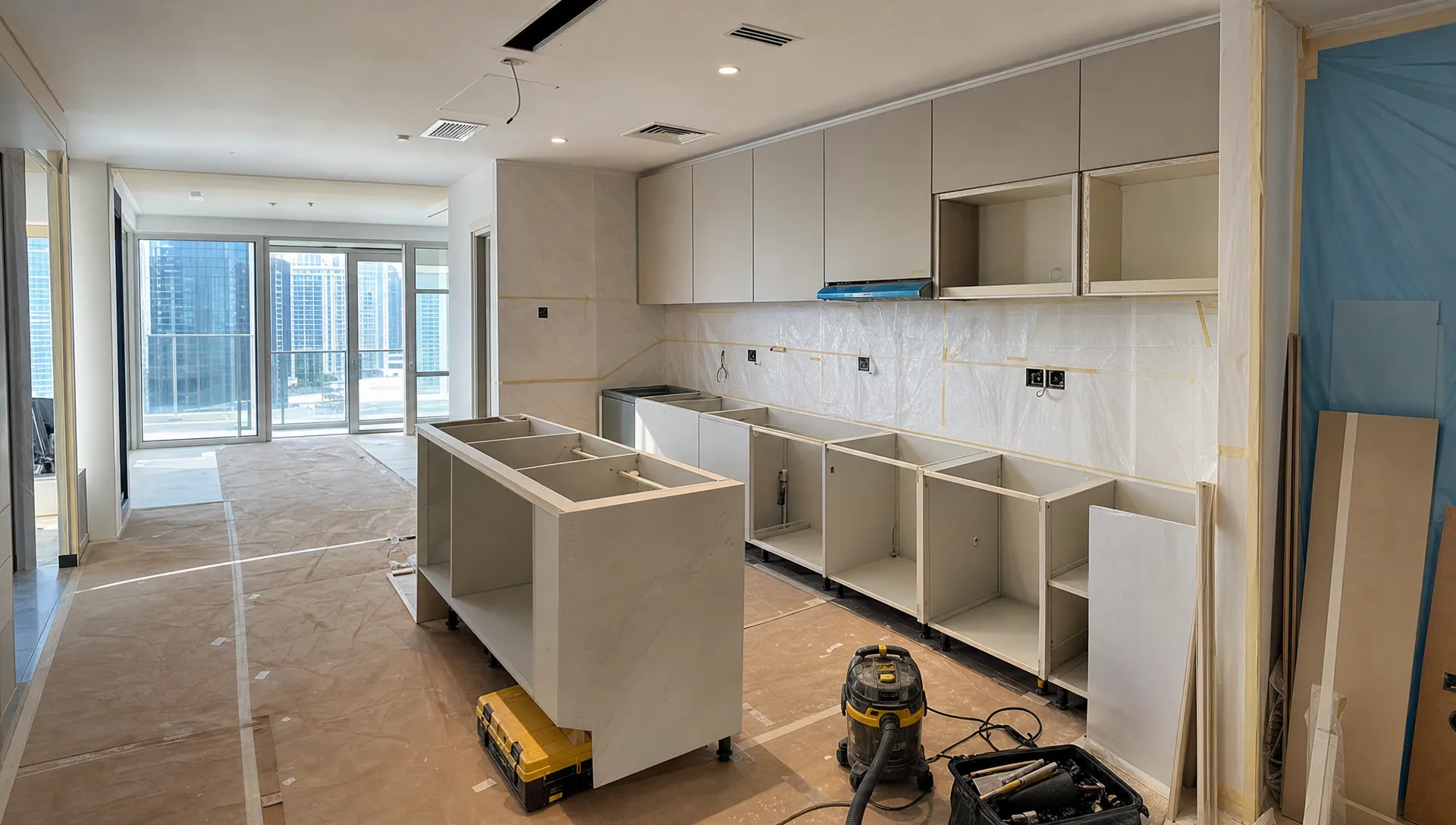
What is the realistic timeline from approval to handover?
A kitchen renovation timeline depends on approvals, material availability, custom joinery production, countertop templating, MEP work and site access. Ask for a schedule that breaks the project into stages rather than a single completion date.
A practical timeline should include measurement, design approval, material ordering, demolition, rough MEP work, flooring or wall preparation, cabinet installation, countertop measurement, countertop installation, backsplash work, appliance fitting, testing and snagging.
Be careful with promises that sound too fast for the scope. Speed is useful only if it does not compromise coordination. For example, custom cabinets usually cannot be finalized properly until site dimensions and appliance specifications are confirmed.
Who will supervise the project daily?
The person who sells the project may not be the person managing it. Ask who your main contact will be once work starts and who will be physically checking the site. You should know how often the supervisor visits, how decisions are recorded and how urgent issues are handled.
Clear communication prevents small decisions from turning into expensive mistakes. Cabinet handle placement, tile alignment, socket heights and countertop joints may seem minor at first, but they are highly visible when the kitchen is finished.
Ask whether updates will be sent by WhatsApp, email or site meetings. For larger renovations, written approvals for changes are safer than verbal agreements.
How do you handle variations and unexpected costs?
Almost every renovation has some uncertainty, especially when old finishes are removed. The issue is not whether changes can happen. The issue is how the contractor controls them.
Ask how variations are priced, approved and added to the contract. No extra work should proceed without a written cost and explanation. This protects both sides. You avoid surprise invoices and the contractor avoids disagreement over unpaid work.
Common variation triggers include hidden water damage, weak existing wiring, out-of-level floors, unavailable materials, appliance changes and design upgrades requested after work begins. A professional contractor will explain these risks early rather than using them later as pressure points.
For broader hiring advice, the guide on how to hire the best contractor for home renovation can help you assess contracts, communication and red flags across any renovation project.
What warranty or defect support do you provide?
A kitchen is a high-use space, so aftercare matters. Ask what happens if a cabinet hinge loosens, a drawer does not align, silicone fails, a leak appears or an electrical fitting stops working after handover.
The warranty should be specific. It should explain what is covered, what is excluded, how long the coverage lasts and how service requests are handled. Product warranties for appliances or branded hardware may be separate from workmanship warranties, so ask for the distinction.
Also ask whether there will be a snagging inspection before final payment. A proper handover should include testing drawers, doors, lights, sockets, taps, drainage, appliances and ventilation where applicable.
What payment schedule do you require?
Avoid paying too much too early. Kitchen contractors usually need an advance for materials, especially for custom joinery or imported finishes, but the payment schedule should be tied to project milestones.
A balanced schedule might be linked to contract signing, material procurement, completion of rough works, cabinet installation, countertop installation and final handover. The exact structure can vary, but it should be written clearly before work starts.
Ask what documents you will receive with each payment, such as invoices, receipts, approved drawings or material confirmations. If a contractor pushes for full payment upfront, treat it as a serious warning sign.
Red flags when interviewing kitchen contractors
Some warning signs appear before the first tool enters your home. If you notice several of these during the quotation stage, slow down and ask more questions.
- The contractor gives a lump-sum price without visiting the site or reviewing measurements.
- The quotation does not describe materials, finishes or exclusions.
- Approval requirements are dismissed without checking your property type.
- The contractor refuses to provide examples of similar work.
- Payment terms are unclear or heavily front-loaded.
- There is no named project contact or site supervisor.
- Verbal promises are not added to the quotation or contract.
A polished sales conversation is not enough. You are looking for structure, transparency and technical awareness.
How to compare answers after meeting contractors
After speaking to two or three kitchen contractors, do not compare only the final price. Create a simple comparison based on scope, communication and risk.
| Evaluation point | Strong answer | Weak answer |
|---|---|---|
| Site understanding | Contractor identifies constraints and asks practical questions. | Contractor prices quickly without inspecting details. |
| Approval knowledge | Contractor explains likely NOCs and responsibility. | Contractor says approvals are not a concern for any project. |
| Quote clarity | Scope, materials and exclusions are itemized. | Price is vague and difficult to compare. |
| MEP coordination | Plumbing, electrical and ventilation are planned early. | Hidden works are treated as an afterthought. |
| Communication | One contact person and update method are confirmed. | You are unsure who will manage the job. |
| Aftercare | Warranty and snagging process are explained. | Support after handover is unclear. |
If you want a more detailed planning tool before signing, use a complete kitchen renovation checklist to review layout, approvals, budget, materials and MEP coordination in one place.
Frequently Asked Questions
How many kitchen contractors should I speak to before hiring? Speaking to two or three contractors is usually enough if you have a clear brief. More quotes can help, but too many can become confusing unless every contractor is pricing the same scope.
Should I choose the cheapest kitchen contractor? Not without checking what is included. A cheaper quote may exclude demolition, MEP work, countertops, approvals or finishing. Compare specifications and exclusions before comparing totals.
Do kitchen renovations in Dubai need approvals? Some do and some do not. It depends on your property type, building management rules and the scope of work. Moving plumbing, changing electrical systems, altering walls or affecting ventilation is more likely to require approval than a simple cosmetic update.
What should a kitchen contractor quotation include? It should include labor, materials, cabinet specifications, countertop details, MEP scope, demolition, disposal, painting, exclusions, timeline, payment terms and warranty information.
Can I live at home during a kitchen renovation? Often yes, but it depends on the scope and your tolerance for dust, noise and limited cooking access. Ask the contractor when water, power or kitchen access will be interrupted so you can plan ahead.
Plan your kitchen renovation with more confidence
The right questions help you choose kitchen contractors who are organized, transparent and capable of managing the details that matter in Dubai homes. Before you sign, make sure the contractor understands your property, approvals, layout goals, MEP requirements, material expectations, timeline and warranty needs.
If you are planning a kitchen remodel, Best Renovation provides renovation, interior design, fit-out, plumbing, carpentry, flooring and painting services for homes and commercial spaces in Dubai. A clear conversation at the start can make the entire renovation smoother from design to handover.